
1903 – Ford Model A
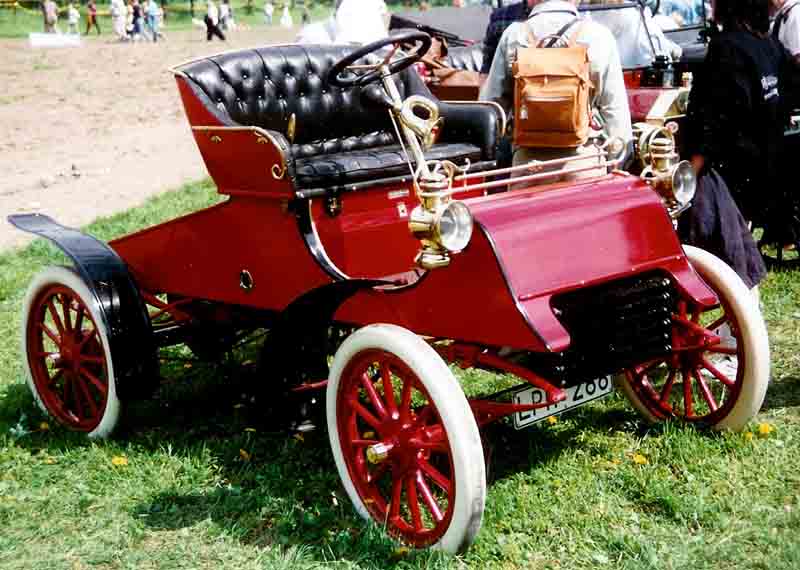
In 1903 the automobile was still shaking off its nervousness, still unsure whether it belonged to inventors’ sheds or everyday streets, and the Ford Model A arrived like a quiet vote of confidence in ordinary people. This was Henry Ford’s first production car, and it carried none of the drama of grand engineering claims, only a sincere belief that mobility should not be reserved for the privileged few. The Model A looked simple, almost shy, with its wooden frame, spindly wheels, and open seating that exposed driver and passenger alike to dust, wind, and weather, but that openness was part of its honesty. Nothing was hidden, nothing pretended to be more than it was. Underneath, a modest two-cylinder engine worked steadily, not to thrill but to endure, and that steadiness reflected the mindset of the man who built it. Ford wasn’t trying to impress society, he was trying to understand it, and the Model A was his first real conversation with the public. This car taught its drivers patience, because starting it required care, and steering it demanded attention, but it also taught confidence, because once moving it simply kept going. There was no excess here, no unnecessary ornamentation, just the essentials arranged with purpose. People who bought the Model A weren’t chasing status, they were choosing self-reliance. They were shopkeepers, mechanics, doctors, and dreamers who wanted to shorten distances and lengthen possibilities. In a time when roads were unreliable and breakdowns were expected, the Model A’s relative dependability felt like a small miracle. It didn’t dominate the road, it cooperated with it, rattling along uneven surfaces as if accepting reality rather than fighting it. There is something deeply human about that acceptance, because progress rarely begins with perfection, it begins with willingness. The Model A also carried the emotional weight of beginnings. For Ford, it represented risk, persistence, and a refusal to quit after earlier failures. For buyers, it represented the first taste of a life less constrained by geography. You can imagine a family setting out at dawn, bundled against the cold, feeling both exposed and empowered, knowing that the journey itself was part of the reward. This car didn’t promise speed or luxury, it promised access, and access changes societies more than spectacle ever can. Though it would soon be eclipsed by better, faster, more refined machines, the 1903 Ford Model A deserves its place in history not for what it achieved mechanically, but for what it signaled emotionally. It marked the moment when the automobile began aligning itself with the rhythms of everyday life rather than the ambitions of inventors alone. It was imperfect, experimental, and earnest, and in those qualities it mirrored the people who drove it. The Model A didn’t announce a revolution, it practiced one quietly, teaching both its maker and its owners that the future could be built not with noise and bravado, but with humility, learning, and the courage to start anyway.