
1905 Cadillac Model D
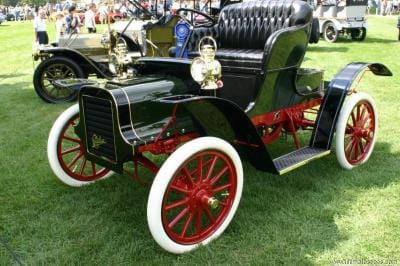
1905 felt like the year the automobile decided to grow up and take responsibility for itself, and that maturity showed clearly in the Cadillac Model D, a car that treated precision not as a luxury but as a moral principle. Built by Cadillac under the quiet, exacting influence of Henry Leland, this machine carried a belief that would quietly reshape the industry: parts should be made so accurately that they could be swapped without argument. Until then, cars were individual personalities, each one slightly moody, each repair a negotiation. The Model D challenged that chaos with discipline. Its four-cylinder engine was smooth, confident, and unusually refined for its time, not because it wanted to impress, but because it wanted to be dependable. Starting it felt reassuring, like shaking hands with someone who looked you in the eye and meant what they said. On the road, the car behaved predictably, holding its composure over rough surfaces and long distances, and that predictability gave drivers a new emotional experience: trust. People began to believe they could plan around a car rather than merely react to it. The Model D didn’t just move bodies, it moved expectations. Owners spoke about it the way one speaks about a reliable colleague, not with excitement alone, but with respect. There was also a subtle elegance to it, not loud or ornamental, but rooted in balance and proportion, suggesting that engineering itself could be beautiful when done properly. In a world still unsure whether automobiles were a passing curiosity or a permanent force, Cadillac in 1905 answered with calm certainty. This car didn’t argue for the future, it demonstrated it. It said that machines could be precise, repeatable, and honest, that progress didn’t need constant invention so much as careful execution. The true legacy of 1905 lies in that shift of mindset, because once people experienced a car that behaved consistently, they never wanted to go back. The Cadillac Model D stands as a quiet turning point, the moment the automobile stopped relying on personality and started relying on principle, and in doing so, it brought the world one step closer to trusting technology as a partner in everyday life rather than a risk to be managed.