1906 Rolls-Royce 40/50 hp
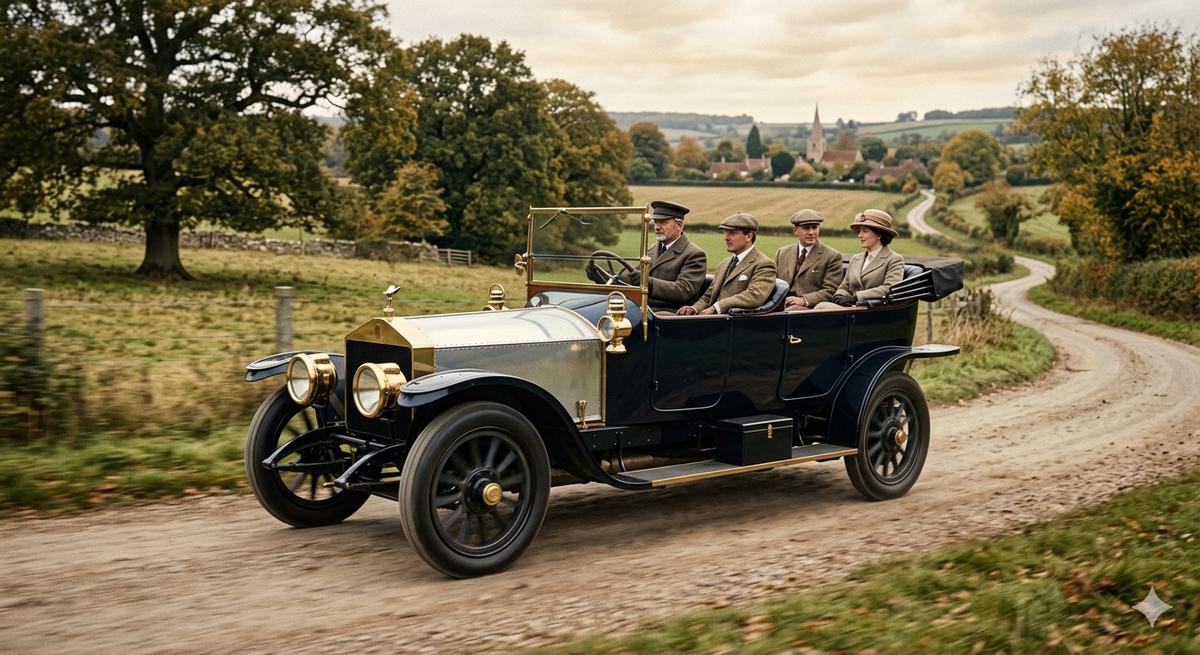
1906 was the year the automobile discovered composure at speed, and that realization took shape in the quietly formidable , a machine that did not chase attention but earned admiration mile after mile. Born from the philosophy of and the meticulous mind of , this car approached engineering like a craftsman approaches a promise, with patience, discipline, and an almost stubborn refusal to accept imperfection.
At a time when most automobiles still felt like unpredictable experiments, the 40/50 hp arrived with an entirely different temperament. It did not lurch or protest, it flowed. The engine ran with a smoothness that felt almost unnatural for the era, as though the mechanical parts had agreed among themselves to cooperate rather than compete. Drivers noticed this immediately, not as a dramatic revelation, but as a quiet easing of tension.
You no longer braced yourself for noise, vibration, or sudden failure, you simply drove. That subtle shift changed the emotional contract between human and machine. Long journeys, once approached with caution and contingency, began to feel achievable with confidence. The car seemed to understand endurance, not just in distance but in spirit. It wasn’t about arriving quickly, it was about arriving without strain. There was also an elegance to its restraint.
Where others chased power in bursts, this Rolls-Royce delivered it with grace, as if aware that true strength does not need to be displayed aggressively. Passengers could sit, converse, observe the passing world, and trust that the car beneath them would remain composed, almost protective in its steadiness. This sense of calm became its defining character, and it set a new expectation across the industry. Reliability was no longer a pleasant surprise, it was becoming a requirement.
The 1906 Rolls-Royce did something even more profound than refining engineering, it refined perception. It taught people that machines could be serene, that movement could be smooth enough to disappear into the background of experience. In human terms, it felt like the difference between surviving a journey and living through it. There is a certain dignity in that idea, a belief that progress should reduce friction not only on the road but within the mind of the person behind the wheel. As the miles accumulated, so did its reputation, not through loud claims but through quiet proof.
By simply doing its job exceptionally well, consistently and without drama, it redefined what excellence looked like in an automobile. 1906, through this car, marked the moment when engineering stopped trying to impress and started trying to reassure, and in that transition, the automobile became something more than transport, it became a trusted presence in the rhythm of everyday life.