BOZO 1: Introduction to BOZO Shipping & Logistics
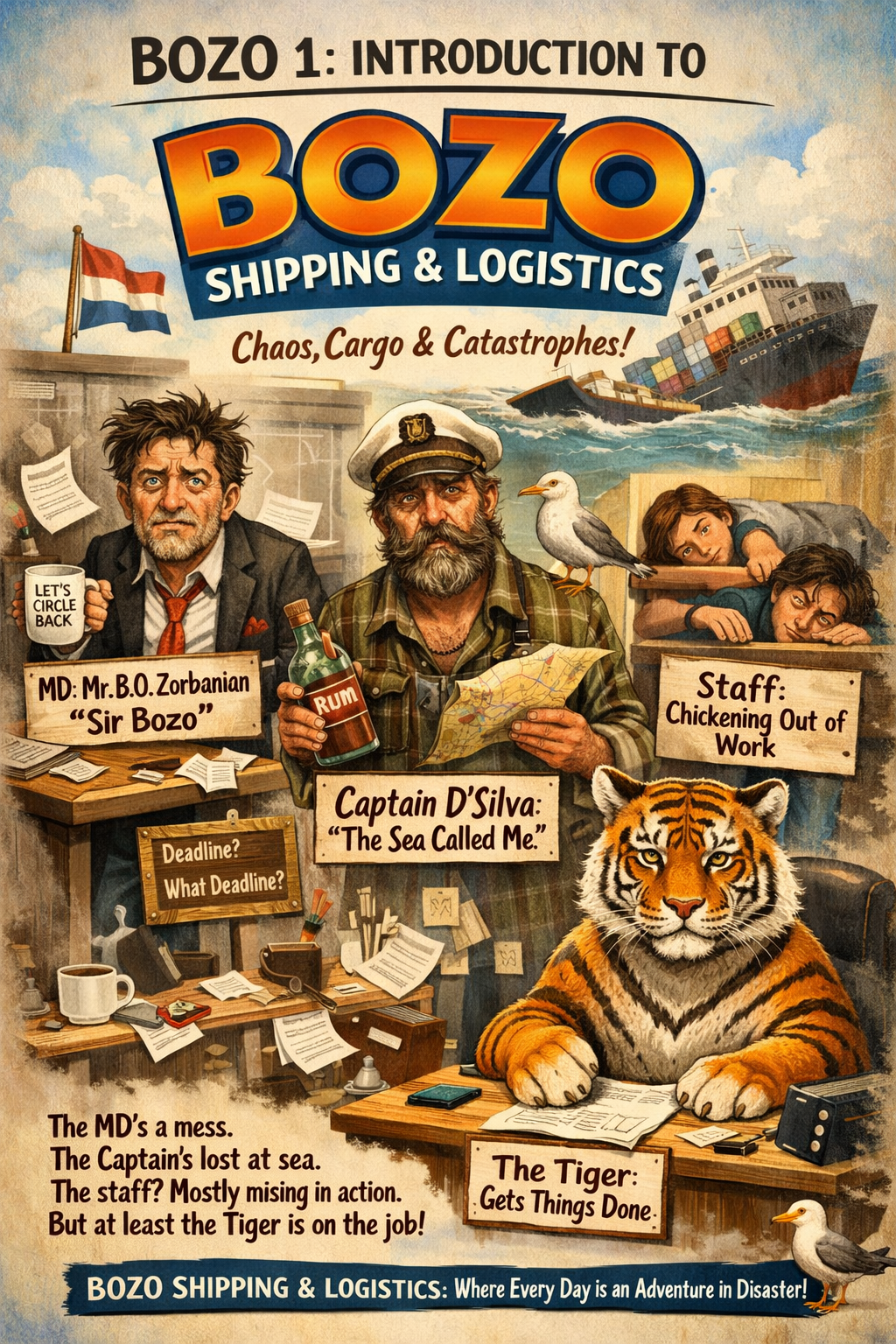
There are shipping companies that move cargo across oceans with discipline, precision, and crisp white uniforms. Then there is BOZO Shipping & Logistics, a floating monument to confusion, overconfidence, emotional instability, and tea breaks that somehow last longer than international voyages. BOZO was not built on systems. It was built on vibes. Unsteady vibes. The kind of vibes that make a clipboard disappear, a forklift cry for mercy, and a man in authority stare at a container for forty minutes as if it personally insulted his upbringing. At the top of this trembling empire sits the Managing Director, Mr. B.L. Ozo himself, a man who always looks as though he has just received terrible news from three different countries. His tie is never straight, his glasses are always slightly fogged, and his soul appears to be permanently waiting for a more suitable profession. He begins every morning with determination, every afternoon with panic, and every evening by saying, “This is fine,” in a tone that has never once meant that anything is fine. Then comes the captain, Captain Bartholomew Crank, a larger wreck in every measurable category. If the MD is an office storm, the captain is a seagoing landslide. He squints at maps like they are riddles written by enemies. He salutes late, shouts early, and has the unique gift of making even calm water feel nervous. Sailors say the sea has moods. The sea says the same thing about Captain Crank. The staff of BOZO, meanwhile, are experts in strategic disappearance. At the first hint of real work, they develop sudden interests in rope inspection, paper sorting, horizon observation, and deeply unnecessary discussions about biscuits. A crate arrives, and five men study it from a respectful distance like archaeologists examining an ancient curse. Someone always says, “Let us not rush this,” about a task involving a trolley and two boxes. Yet among this fluttering flock of excuses stands one figure of terrifying competence. The tiger. Nobody is fully sure how the tiger entered payroll, but by now nobody questions it. In an organisation held together by dented mugs, unsigned forms, and nervous laughter, the tiger is the only employee with genuine presence. He does not roar often. He does not need to. He merely walks past, and accountability returns to the building. Chairs straighten. Spines align. Men who have avoided effort for months suddenly discover hidden reserves of professionalism. His name is Mr. Sheru, Head of Ground Realities. Sheru has no patience for nonsense, which is unfortunate, because BOZO manufactures nonsense at industrial scale. He watches the MD collapse into managerial despair, watches the captain confuse left with destiny, watches the staff scatter like guilty pigeons, and says nothing for long stretches. This silence has become the most effective policy in company history. What makes BOZO remarkable is not that it functions badly. Many places do. What makes BOZO special is the sincerity of its disorder. These are not villains. These are not lazy cartoons in uniforms. They are gloriously fragile people, each carrying private fears, public blunders, and the stubborn hope that maybe tomorrow the ship will leave on time, the cargo will go to the correct port, and nobody will staple an invoice to a sandwich wrapper again. Mr. Ozo truly wants success. Captain Crank truly believes he is inspiring. The staff truly intend to begin working in about seven minutes. And Sheru, with the heavy dignity of a creature who should never have had to supervise humans in the first place, truly holds the whole enterprise together by the thin thread of disappointed excellence. So welcome to BOZO Shipping & Logistics, where the containers are large, the confidence is artificial, the leadership is wobbling, the workforce is evaporating, and one tiger is doing the work of a civilisation. This is not merely a company. It is a voyage of administrative survival. And it is only just beginning.