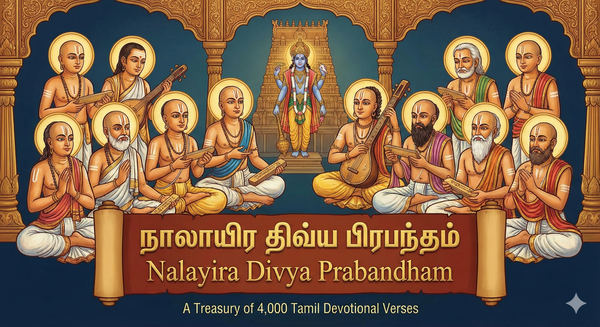
Irandām Tiruvandādi — Bhutat Āzhvār (Pāsurams 21–30)
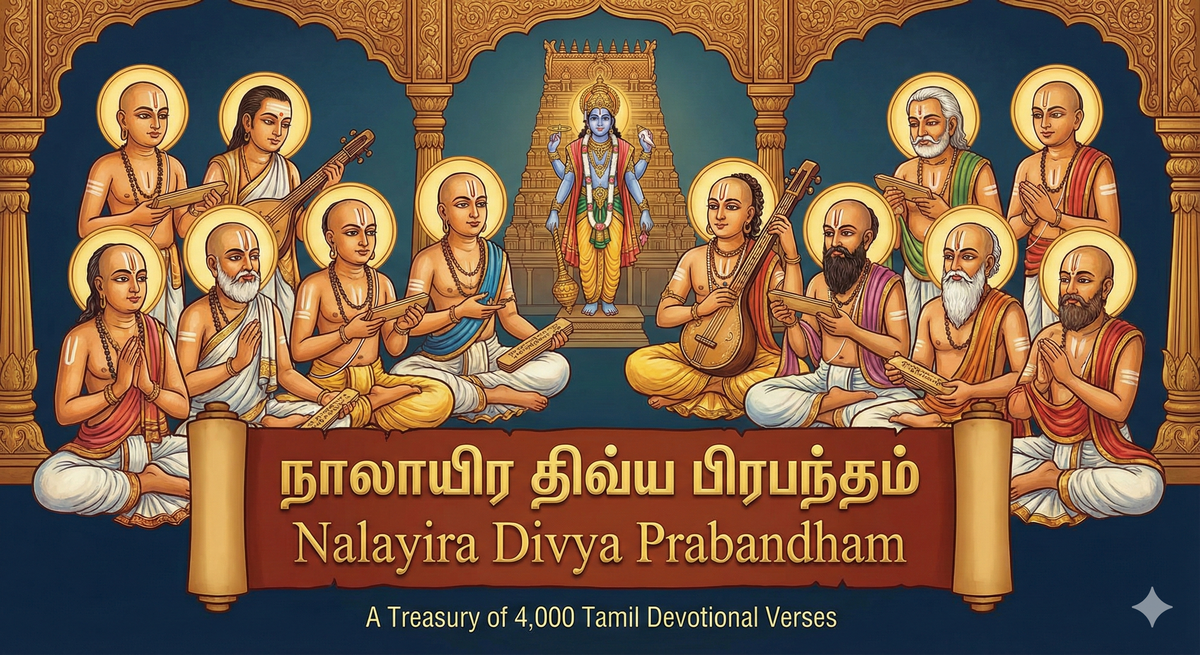
(Tamil text follows the traditional Srirangam recitational version used in devotional contexts; minor textual variants may exist across manuscripts.) அவனே எனக்கு எல்லாம் ஆனான் அவனே வழியும் விளக்கும் ஆனான் அவனே நின்று காத்தான் என்றேன் அவனே என் நலம் என்றேன். Bhutat Āzhvār begins this set by affirming completeness. When the heart accepts the Divine as both path and protector, life feels held. The verse offers quiet confidence, reminding us that support need not be searched for; it already stands with us. நெஞ்சம் கலங்க நினைவு வந்தால் அஞ்சல் என்றான் அருள் மொழிந்து மஞ்சம் போல மனம் மென்மையானது துன்பம் தூரம் போனது. Here reassurance acts as healing. Fear loosens not through argument but gentleness. The verse mirrors how kindness, divine or human, restores balance. மாறும் உலகம் மயங்கச் செய்தாலும் மாறாத நீ என கண்டேன் சாரும் உறவுகள் சிதறினாலும் சாராத உன் அருள் சேர்ந்தேன். Change loses its sting when constancy is known. The verse comforts those navigating uncertainty by pointing to a refuge untouched by circumstance. பார்க்கும் பார்வை அவனே ஆனான் கேட்கும் செவி அவனே ஆனான் பார்க்கும் பொருள் அவனே ஆனான் வாழும் வாழ்வு அவனே ஆனான். Integration deepens here. The Divine is not apart from experience but present within it. Ordinary life becomes sacred through awareness. உறங்கும் போதும் உன் பேர் நின்றது விழிக்கும் போதும் உன் பேர் ஒலித்தது தளரும் நேரம் வந்த போதும் தாங்கும் கருணை வந்தது. Grace persists through fatigue. This verse reassures that devotion need not be flawless to be effective; compassion carries us when effort fades. எண்ணம் சிதறும் நேரம் வந்தால் உன் பேர் மருந்தாய் ஆனது கண்ணீர் நிறைந்த கண்களுக்கும் கருணை ஒளி கண்டது. Remembrance steadies scattered thoughts. Even sorrow is met with light. The verse speaks softly to emotional vulnerability. நான் என்ற உணர்வு நழுவி போனது நீ என்ற உண்மை நிறைந்தது ஏன் என்ற கேள்வி கரைந்து போனது தேன் போன்ற அமைதி வந்தது. Ego dissolves without struggle. Peace arrives without explanation. The verse reflects maturity rather than intensity. உலகம் பொய் என கூறவில்லை ஆனால் நிலை அல்ல என உணர்ந்தேன் நிலையான நீ என கண்ட பின்னே நிலை தேடல் முடிந்தது. Bhutat Āzhvār does not reject the world; he understands its impermanence. Stability is found not by denial but by anchoring in the eternal. எல்லாம் அவன் அருள் என்றேன் எல்லாம் அவன் செயல் என்றேன் என்னுள் நன்றி பெருகியது எண்ணம் சாந்தி அடைந்தது. Gratitude replaces analysis. Life is received rather than judged. This verse highlights acceptance as spiritual wealth. இதுவே விளக்கு இதுவே ஒளி இதுவே பாதை இதுவே நிலை இதுவே அவன் அருள் செய்த பத்து இதுவே எனக்கு என்றும் துணை. The tenth pāsuram closes this set by naming grace itself as light and support. The path is no longer separate from the traveler. These ten pāsurams continue to strengthen the second lamp of the Divya Prabandham. Bhutat Āzhvār’s voice remains gentle and steady, guiding the heart from reliance into rest, from questioning into quiet trust.