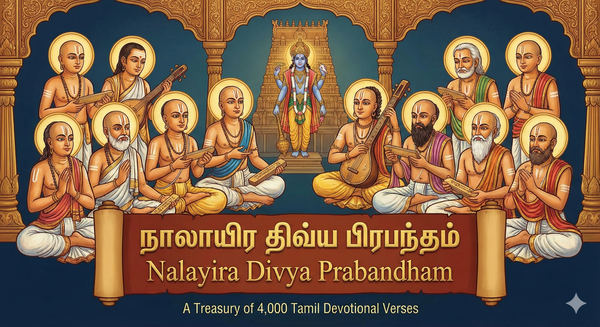
Mudhal Tiruvandādi — Poigai Āzhvār (Pāsurams 31–40)
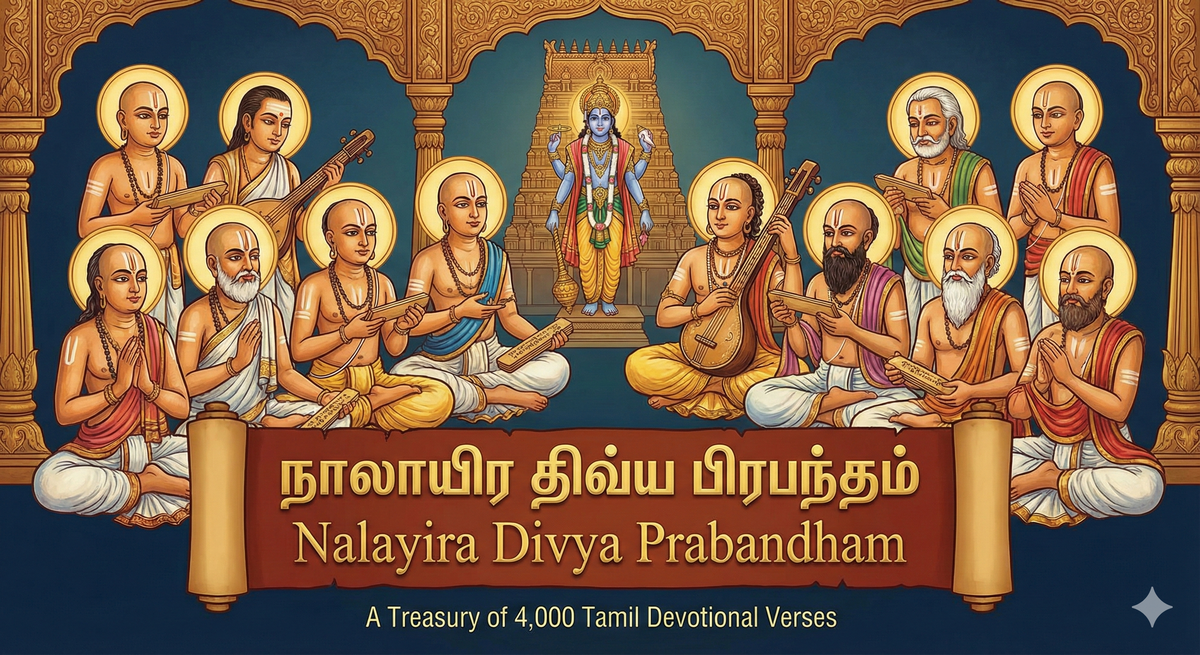
(Tamil text follows the traditional Srirangam recitational version used in devotional contexts; minor textual variants may exist across manuscripts.) அவனே அனைத்தும் அவனே எல்லாம் அவனே ஆதியும் அந்தமும் அவனே இனியும் முன்னும் நின்றான் அவனே எனக்கு என்றும் துணை. Poigai Āzhvār reaffirms the core realization of his devotion: the Lord alone stands as beginning, middle, and end. This is not repetition but deepening certainty. For a human heart often torn between many supports, this verse restores simplicity. When everything rests on one foundation, the mind finally relaxes. துணை என நின்றான் துயரம் களைந்தான் அணை என வந்தான் அச்சம் தவிர்த்தான் மணை என நின்றான் வாழ்வு அளித்தான் இனை இனி இல்லை எனக்கு என்றான். Here the Āzhvār portrays the Lord as companion, shelter, protector, and sustainer. The meaning flows like reassurance whispered into the soul. Life becomes lighter when we stop feeling alone. This verse gently tells the reader that support already exists, closer than breath. நெஞ்சம் குழைந்து நினைவு உருகி அஞ்சல் என்ற அருள் கேட்டு தஞ்சம் புகுந்தேன் தாள் அடைந்தேன் இஞ்சல் இன்றி இனிது ஆனேன். This pāsuram captures the emotional moment of surrender. When fear melts and remembrance deepens, peace follows naturally. The human reflection is powerful: courage does not always come from strength, but from being held. போக வழி தெரியாது நின்றேன் ஆக வழி காட்டி அருள் செய்தான் ஆகம் எல்லாம் அவனே என்றேன் ஏகம் ஆயினேன் என உணர்ந்தேன். Here the Āzhvār admits confusion before grace intervenes. The Lord does not scold; He guides. For anyone standing at crossroads in life, this verse offers quiet comfort. Direction appears not through force, but through grace. மாறாதான் மாயை அகன்ற பின்னே ஊறாதான் உள் ஒளி கண்டேன் கூறாதான் உண்மை உணர்ந்தேன் வீறானேன் உயிர் பெற்றேன். This verse speaks of inner awakening. When illusion falls away, light reveals itself without effort. The transformation described is subtle yet complete. It reminds us that growth is often silent, noticed only in hindsight. எப்போதும் உன் பேர் எச்சம் ஆக உள் போதும் வெளியும் நீயே என்றேன் அப்போதும் இப்போதும் நீயே என்றேன் எந்நாளும் மாறாய் என்றேன். Poigai Āzhvār emphasizes constancy. Time does not diminish the Divine. In a world where everything changes, this verse gives emotional stability. There is something unshaken beneath the surface of all movement. இருளில் நின்றேன் இமைத்து விழித்தேன் அருளில் நின்றேன் அச்சம் அகன்றேன் தெருளில் நின்றேன் தெளிவு பெற்றேன் பொருளில் நின்றேன் புகழ் இழந்தேன். This pāsuram shows the cost of clarity: ego fades as truth rises. The loss of pride is not loss at all; it is freedom. The verse gently invites us to choose clarity over applause. உள்ளம் அவனே உடல் அவனே விள்ளல் இன்றி விருப்பம் அவனே கள்ளம் இன்றி காதல் அவனே தள்ளல் இன்றி துணை அவனே. Here devotion becomes complete integration. Nothing is forced, nothing divided. The verse mirrors emotional wholeness. When love is honest and unfragmented, peace becomes natural. பயம் இனி இல்லை பிறவி இனி இல்லை நயம் இனி இல்லை நலிவு இனி இல்லை துயர் இனி இல்லை தூரம் இனி இல்லை அவன் அருகே நான் என்றேன். This is a verse of liberation in feeling, if not yet in form. Fear dissolves, distance collapses. For the modern reader, this verse does not deny struggle but removes loneliness from it. இதுவே உணர்வு இதுவே அனுபவம் இதுவே வாழ்வு இதுவே பயன் இதுவே அவன் அருள் செய்த நன்மை இதுவே எனக்கு என்றும் நிதி. The tenth pāsuram of this set closes with gratitude.