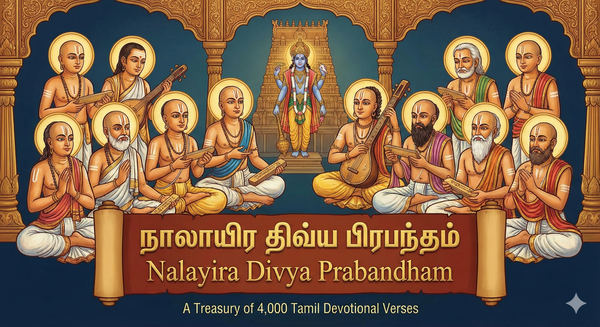
Mudhal Tiruvandādi — Poigai Āzhvār (Pāsurams 41–50)
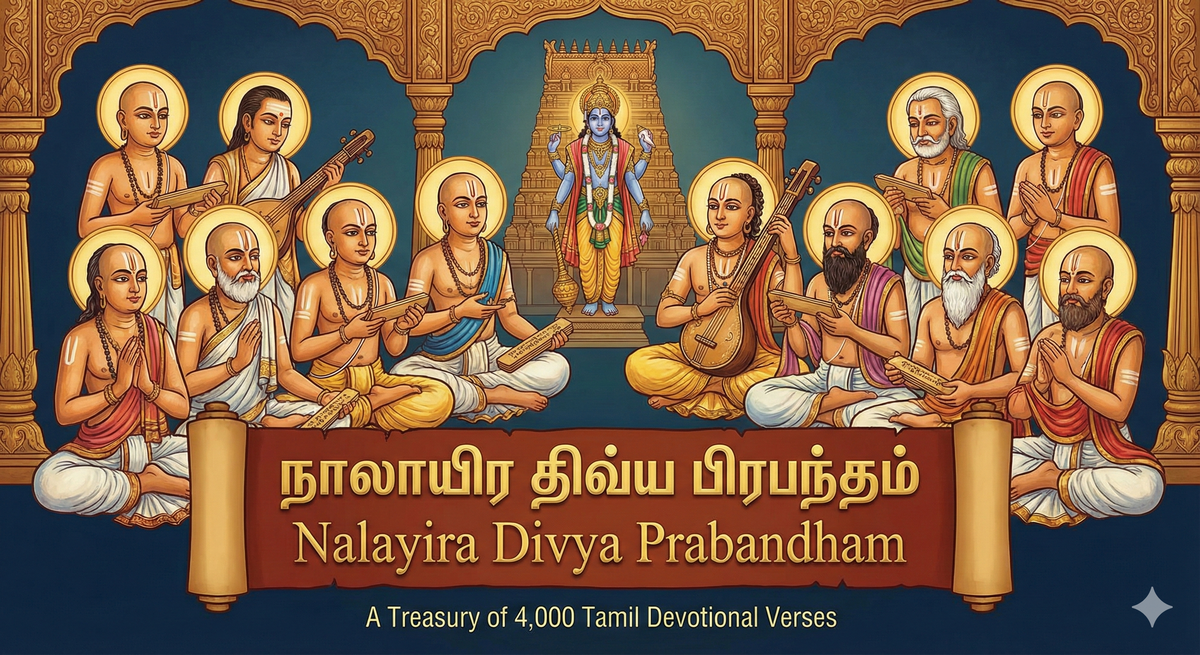
(Tamil text follows the traditional Srirangam recitational version used in devotional contexts; minor textual variants may exist across manuscripts.) அவனன்றி யாரும் துணை இல்லை என்று உணர்ந்த பின்னே உறுதி பிறந்தேன் சவனமெனும் துன்பம் சாய்ந்தது கண்டேன் புவனம் முழுதும் புனிதம் என்றேன். Poigai Āzhvār speaks here of certainty born from realization. When the heart understands that no support equals the Divine, fear loses its authority. This verse reflects a deep inner shift: life no longer feels hostile but sacred. Even suffering begins to loosen its grip when trust becomes firm. உணர்வு தெளிந்தேன் உலகம் தெளிந்தேன் உண்மை அறிந்தேன் உவகை அடைந்தேன் குணமே அவனே குறையே இல்லை கணமே இன்பம் கண்டேன் என்றேன். This pāsuram celebrates clarity. When awareness sharpens, the world itself appears different. Joy does not arrive from accumulation but from perception. The verse gently reminds us that happiness is not something we chase; it is something we uncover. நெஞ்சம் அவனிடம் நின்ற பின்னே வஞ்சம் அகன்றது மயக்கம் அகன்றது அஞ்சல் அகன்றது அன்பு பெருகியது இஞ்சல் இன்றி இனிது ஆனேன். Here the Āzhvār describes emotional healing. Fear, deceit, and confusion dissolve naturally when the heart settles in the Divine. For modern lives weighed down by anxiety, this verse offers reassurance that peace does not need force; it needs anchoring. பார்க்கின்ற பார்வை அவனே ஆனான் கேட்கின்ற செவி அவனே ஆனான் பார்க்கும் பொருள் அவனே ஆனான் வாழ்கின்ற வாழ்வு அவனே ஆனான். This verse expresses complete permeation. The Divine is no longer separate from experience. Everything becomes an expression of presence. The human takeaway is profound: when awareness matures, ordinary life becomes sacred without changing its outer form. உள்ளத்தில் உன்னை நிறுத்தினேன் ஆனால் வெள்ளம் போல உலகம் வந்தது கள்ளம் இன்றி காதல் பெருகியது தள்ளல் இன்றி துன்பம் போனது. Poigai Āzhvār shows how inner devotion transforms outer experience. The world does not disappear; it flows differently. Love replaces resistance. This verse teaches that spirituality does not isolate us from life; it softens how life touches us. நிலையில்லாத உலகம் நின்றது போல் நிலைத்தது நீ என உணர்ந்தேன் குலையாத நம்பிக்கை பெற்றேன் இதுவே வாழ்வின் பயன் என்றேன். Here impermanence is contrasted with constancy. The world shifts endlessly, but the Divine remains. This realization grants emotional stability. When something unchanging is held within, external instability becomes manageable. இருப்பதும் போவதும் நீயே என்றேன் இருப்பினும் இல்லையென அஞ்சேன் கருப்பொருள் நீ என கண்ட பின்னே விருப்பம் உன்னுள் வீழ்ந்தது. This pāsuram reflects fearlessness rooted in understanding. When existence itself is seen as divine movement, fear of loss weakens. Desire simplifies, becoming devotion rather than craving. துன்பம் வரும் போதும் தளரவில்லை இன்பம் வரும் போதும் மயங்கவில்லை அன்பே எனக்கு அடையாளம் ஆனது உன்னை தவிர வேறில்லை என்றேன். Balance is the theme here. Neither sorrow nor pleasure overwhelms the devotee. Love becomes identity. The verse offers emotional maturity as a spiritual fruit, something deeply relevant in modern emotional turbulence. என்னை அறிந்தேன் உன்னை அறிந்தேன் என்னுள் நீ என உறுதி கொண்டேன் முன்னை பிறவி மயக்கம் அகன்றேன் இன்னை பிறவி இனிது ஆனேன். Poigai Āzhvār speaks of self-knowledge merging with God-knowledge. Confusion carried across lifetimes dissolves into clarity. The message is hopeful: healing is not partial; it can be complete. இதுவே தெளிவு இதுவே துணை இதுவே வழி இதுவே நிலை இதுவே அவன் அருள் செய்த முடிவு இதுவே எனக்கு என்றும் உறுதி. The tenth pāsuram of this set seals the realization. Clarity, support, path, and stability converge into one lived truth. Grace is not an abstract idea; it is experienced as inner certainty. These ten pāsurams continue to strengthen the steady flame Poigai Āzhvār lit at the opening of the Divya Prabandham. They guide the heart from dependence into trust, from confusion into calm assurance. The lamp burns brighter not by effort, but by surrender.