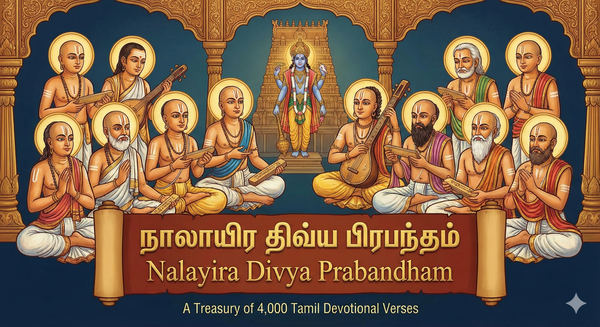
Mudhal Tiruvandādi — Poigai Āzhvār (Pāsurams 71–80)
🌺
(Tamil text follows the traditional Srirangam recitational version used in devotional contexts; minor textual variants may exist across manuscripts.)
நீயே கதி என்று நின்ற பின்னே வேறே துணை தேட மனம் இல்லை தாயே தந்தை என்று உணர்ந்த பின்னே துயரே எனக்கு இனி இல்லை.
Poigai Āzhvār begins this set by affirming final reliance. When the heart recognizes the Divine as the ultimate refuge, the urge to search elsewhere dissolves. The verse reflects emotional security born of trust, the kind that quiets restlessness and brings relief.
உறங்கும் போதும் உன் பேர் நினைந்தேன் விழிக்கும் போதும் உன் பேர் கேட்டேன் கரங்கல் போல மனம் தளர்ந்த போதும் கருணை வந்து தூக்கியது.
Here the Āzhvār describes grace as constant, active even when awareness weakens. The human meaning is comforting: we are not required to be perfect for grace to hold us; it arrives even in fatigue.
மாறும் உலகம் மயங்கினாலும் மாறாத நீ என கண்டேன் சேரும் உறவு சிதறினாலும் சேராத உன் அருள் சேர்ந்தேன்.
This pāsuram contrasts instability with constancy. Relationships, circumstances, and plans may shift, but divine presence remains unchanged. The verse reassures anyone facing loss that something unbreakable still stands.
எண்ணம் சிதற எண்ணி நின்றேன் எண்ணாதே உன்னை அடைந்தேன் கண்ணில் கண்டேன் கருணை நிறைந்தேன் உண்ணும் அமுதாய் உன் பேர் ஆனாய்.
Here the Āzhvār speaks of surrender beyond effort. When striving stops, grace reveals itself. The Lord’s name becomes nourishment. The verse gently teaches that peace often arrives when we stop chasing it.
அஞ்சும் நெஞ்சம் அமைதி கண்டது வஞ்சம் அகன்று வழி திறந்தது மஞ்சம் போல மனம் மென்மையானது இஞ்சல் இன்றி இனிது ஆனது.
Fear softens into calm. Resistance dissolves. This pāsuram reflects emotional healing as a gradual, gentle process, not a dramatic event.
நாளும் நொடியும் நீயே என்றேன் காலம் எனக்கு பயம் இல்லை என்றேன் கோலம் அனைத்தும் உன் அருள் என்றேன் சாலம் ஆனேன் சாந்தியுடன்.
Time itself loses its threat here. When the Divine is seen in every moment, urgency fades. The verse invites a slower, kinder relationship with life.
நான் என்ற சொல் நழுவி போனது நீ என்ற உண்மை நிலைத்து நின்றது ஏன் என்ற கேள்வி கரைந்து போனது தேன் என்ற இன்பம் மனம் நிறைந்தது.
The Āzhvār captures the dissolving of ego without struggle. Identity shifts quietly, leaving sweetness behind. This verse comforts seekers who fear losing themselves in devotion; what is lost is replaced with peace.
பார்க்கும் உலகம் புதிது ஆனது கேட்கும் சொல் எல்லாம் இனிது ஆனது வாக்கும் மனமும் ஒன்றாய் ஆனது தூக்கம் போல துயர் போனது.
Perception itself transforms. The world does not change; the lens does. This verse highlights the inner shift that makes life feel lighter without altering its structure.
என்னை நடத்தும் நீ என கண்டேன் என்னுள் இருப்பதை உணர்ந்தேன் மன்னும் புகழ் உன் பேர் வாழ்க என்றேன் என்னை நீ ஆட்கொண்டாய்.
Here the Āzhvār acknowledges guidance from within. The Divine is not distant instruction but inner movement. The verse instills confidence that we are being led, even when the path feels unclear.
இதுவே பயம் தீரும் மருந்து இதுவே சுமை தள்ளும் வலிமை இதுவே வாழ்வு இனிது ஆகும் அருள் இதுவே எனக்கு என்றும் நிதி.
The tenth pāsuram of this set closes with gratitude and clarity. Grace is named as medicine, strength, and wealth. Life’s weight becomes lighter when carried with trust.
These ten pāsurams continue Poigai Āzhvār’s gentle unveiling of devotion as lived experience. Fear fades not through effort, but through closeness. The lamp burns steadily now, illuminating a life anchored in grace and quiet confidence.