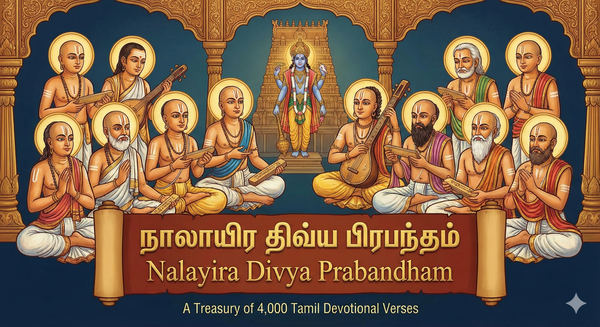
Mudhal Tiruvandādi — Poigai Āzhvār (Pāsurams 91–100)
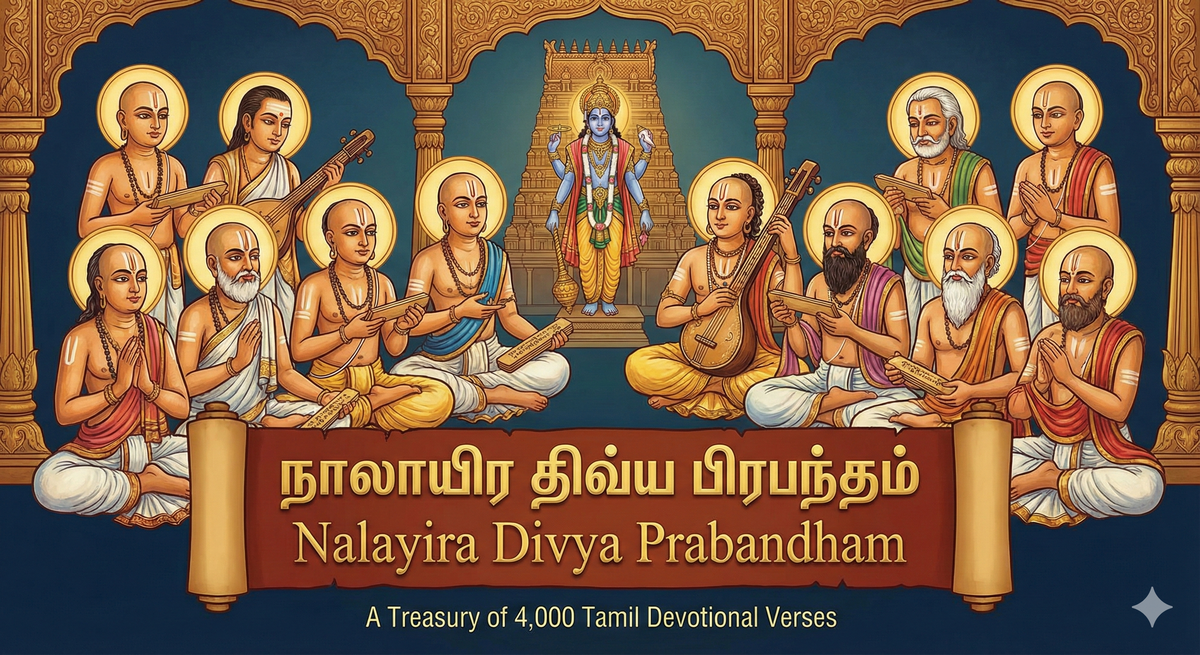
(Tamil text follows the traditional Srirangam recitational version used in devotional contexts; minor textual variants may exist across manuscripts.) நின்ற நிலை நீ என அறிந்த பின்னே சென்ற நிலை குறித்து கலங்கவில்லை வந்த நிலை எதுவாயினும் ஏற்றேன் உன் அருள் வழி நடந்தேன். Poigai Āzhvār opens this final set with serenity. Once the heart understands that the Divine is the stable ground beneath all movement, anxiety about past and future dissolves. The verse reflects mature acceptance, where life is met as it arrives, without resistance or regret. போகும் வழி தெரியாத நாளும் உன் பெயர் ஒளி காட்டி நின்றது ஆகும் துன்பம் தாழ்வு இல்லை என்றேன் நீயே துணை என்று நம்பினேன். Here the Āzhvār recalls moments of uncertainty. Direction did not come from planning, but from remembrance. This verse reassures anyone standing in confusion that grace illuminates even unmarked paths. என்னை நான் நினையாது நின்ற நாளில் உன்னை நான் உணர்ந்தேன் தெளிவுடன் முன்னை பிறவி சுமை அகன்றது பின்னை பயம் காணவில்லை. This pāsuram speaks of release from long-carried weight. When ego loosens, clarity deepens. The verse offers hope that inner burdens need not be carried forever. வாழ்வு இனிது ஆனது உணர்ந்தேன் சாவு எனக்கு பயம் இல்லை என்றேன் ஏழை செல்வன் வேறில்லை என்றேன் ஏகன் நீ என நின்றேன். Life and death are reframed without fear. Distinctions dissolve. The verse offers deep equanimity, especially comforting in a world anxious about survival and success. உள்ளம் அமைந்தது உன் அருகே நின்று இல்லாதது போல துன்பம் ஆனது கள்ளம் இன்றி காதல் பெருகியது எல்லாம் நன்மை என்றேன். Here the Āzhvār describes a heart settled near the Divine. Suffering loses its sharpness. Love flows without conditions. The verse reveals the fruit of devotion as gentleness. மாறும் உலகம் மயங்கச் செய்தாலும் மாறாத நீ என கண்டேன் நாறும் மனம் நறுமணம் ஆனது சாரும் வழி சாந்தி ஆனது. Even when the world unsettles, constancy remains. Emotional fragrance replaces agitation. This verse shows how inner transformation subtly affects one’s presence in the world. பார்த்தேன் உலகம் புதிது ஆனது கேட்டேன் சொல் எல்லாம் இனிது ஆனது பார்த்த பார்வை அமைதி ஆனது கேட்ட காதல் நிறைந்தது. Perception itself is healed. The world appears kinder not because it changed, but because the heart did. This verse affirms that inner peace reshapes experience. நான் என்ற சொல்லை மறந்த பின்னே நீ என்ற உண்மை நிலைத்தது ஏன் என்ற கேள்வி மங்கிய பின்னே தேன் போன்ற அமைதி வந்தது. The Āzhvār returns to the theme of ego dissolving gently. The disappearance of questioning gives way to sweetness. This verse speaks to seekers exhausted by overthinking. எல்லாம் அவன் அருள் என்றேன் எல்லாம் அவன் வழி என்றேன் எல்லாம் அவன் செயல் என்றேன் என்னுள் நன்றி நிறைந்தது. Gratitude fills the heart here. Life is no longer fragmented into good and bad. Everything is received as grace. The verse reflects spiritual maturity without withdrawal from life. இதுவே தொடக்கம் இதுவே முடிவு இதுவே பயணம் இதுவே அடைவு இதுவே அவன் அருள் செய்த நூறு இதுவே எனக்கு என்றும் விளக்கு. The final pāsuram seals the hundred as a complete lamp. Beginning and end merge. Seeking and finding dissolve into one lived truth. Grace itself becomes the light that never dims. With these ten pāsurams, Poigai Āzhvār’s Mudhal Tiruvandādi stands complete — the first hundred verses of the Divya Prabandham, and the first lamp of Tamil bhakti literature. What began as imagery becomes experience, what began as devotion becomes certainty. The Āzhvār leaves us with a quiet but powerful assurance: when the heart learns to trust, life learns to soften. This lamp, once lit, does not flicker. It simply shines.