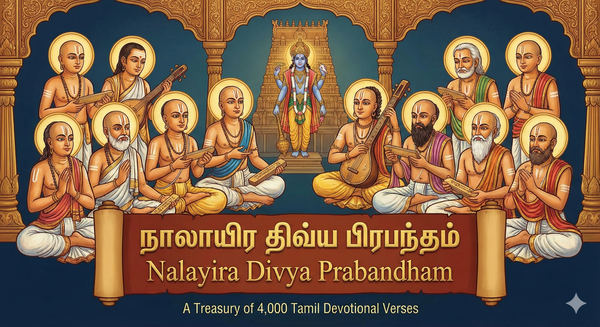
Nānmugan Tiruvandādi — Tirumazhisai Āzhvār (Pāsurams 1–10)
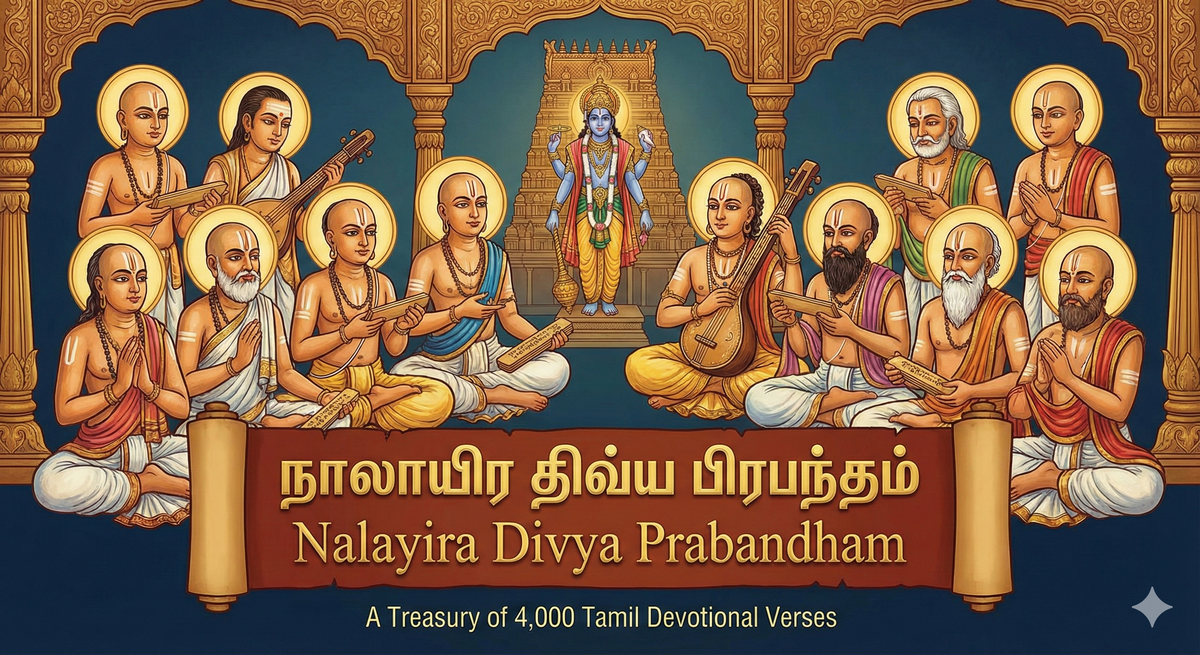
(Tamil text follows the traditional Srirangam recitational flow used in devotional contexts; minor textual variants may exist across manuscripts.) நான்முகனும் தான்முகனும் தானாய் உலகம் படைத்தான் ஆன்முகம் காட்டி அருள் செய்தான் அவனே முதலாய் நின்றான். Tirumazhisai Āzhvār opens with a firm theological declaration. Brahmā, the four-faced creator, is himself born of Nārāyaṇa. Creation does not stand independent of the Supreme. The verse sets the tone of this Tiruvandādi: clarity without compromise, devotion without confusion. படைத்தவன் பல்லுயிர்க்கும் உயிர் ஆனான் படைத்த உலகும் அவனுள் அடங்கியது சுடைத்த சிந்தை தெளியக் கண்டேன் படைத்தோன் அவனே என்றேன். Here the Āzhvār moves from doctrine to realization. Creation and creator are not separate realms. For the human heart, this verse removes fragmentation and restores unity. நான்முகன் தன்னை நாடி இருந்தால் ஏன் முகம் காட்டி மயக்கம் கொள்வான் ஏன் முகம் கொண்டான் இவ்வுலகம் காண அவன் முகம் அல்லாது இல்லை என்றேன். Tirumazhisai Āzhvār challenges misplaced worship. Seeking the created while ignoring the source leads to confusion. The verse is sharp, urging discernment and right alignment. முதலாய் நின்றான் முடிவாய் நின்றான் இடையாய் நின்றான் எல்லாம் ஆனான் பதிலாய் நின்றான் பாவம் தீர்த்தான் நிதியாய் நின்றான் நெஞ்சில் கண்டேன். Here the Lord is declared as beginning, middle, and end. More importantly, He is experienced as inner refuge. The human meaning is grounding: support is already present within. தெய்வம் பிறிது என்று எண்ணாதே உலகம் அவனே என்று அறிந்தேன் தெய்வம் உலகம் வேறில்லை என்றால் துன்பம் ஏது என்றேன். This pāsuram dissolves duality. When divinity is not separated from life, suffering loses its philosophical grip. The verse invites deep acceptance without denial of reality. பிறவி பயம் பெருகாதே அறிந்தேன் பிறப்பு அவன் அருளே என்றேன் மருவி நிற்கும் மயக்கம் அகன்றது திருவடி சேர்ந்தேன் என்றேன். Birth and existence are reframed as grace, not burden. Fear dissolves when life itself is understood as divine movement. நான்முகன் தன் பிழை கண்டான் நாராயணன் அருளால் தான்முகம் கொண்டு தவம் செய்தான் தாழ்வு இல்லை உயர்வு இல்லை. This verse humbles even the creator. Knowledge matures through surrender. Hierarchies dissolve before grace. The teaching is uncompromising and liberating. உலகம் படைத்தது அவன் என்றால் உலகம் அவனை விட்டு எங்கே உலகம் அவனுள் அடங்கினால் உலகம் பயம் ஏன் என்றேன். Fear dissolves through logic and experience combined. If all rests within the Divine, anxiety loses foundation. The verse offers intellectual reassurance aligned with devotion. நான் என்ற உணர்வு நீங்கக் கண்டேன் நீ என்ற உண்மை நிறைந்தது தேன் போன்ற அமைதி நிலைத்தது ஏன் என்ற கேள்வி மறைந்தது. As with the earlier Āzhvārs, ego dissolves naturally. Tirumazhisai Āzhvār shows that clarity need not be emotional; it can be firm and still. இதுவே வழி இதுவே நிலை இதுவே தெளிவு இதுவே பயன் இதுவே அவன் அருள் செய்த பத்து இதுவே எனக்கு என்றும் விளக்கு. The tenth pāsuram seals this opening set. The lamp of discernment is lit — steady, sharp, and unwavering. These ten pāsurams ignite the fourth lamp of the Divya Prabandham. Tirumazhisai Āzhvār’s voice is distinct — intellectually firm, spiritually fearless, and uncompromisingly clear. Where the earlier lamps softened the heart, this lamp sharpens understanding without losing devotion. Together, the lamps now illuminate not only love and vision, but truth without confusion.