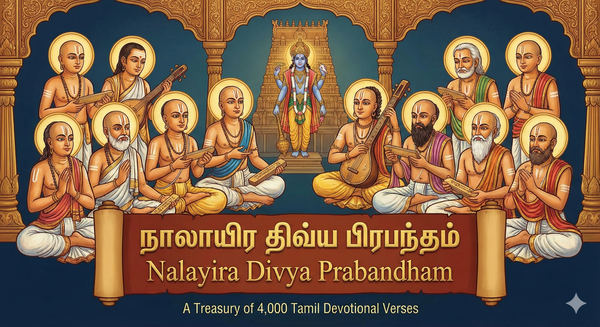
Nānmugan Tiruvandādi — Tirumazhisai Āzhvār (Pāsurams 11–20)
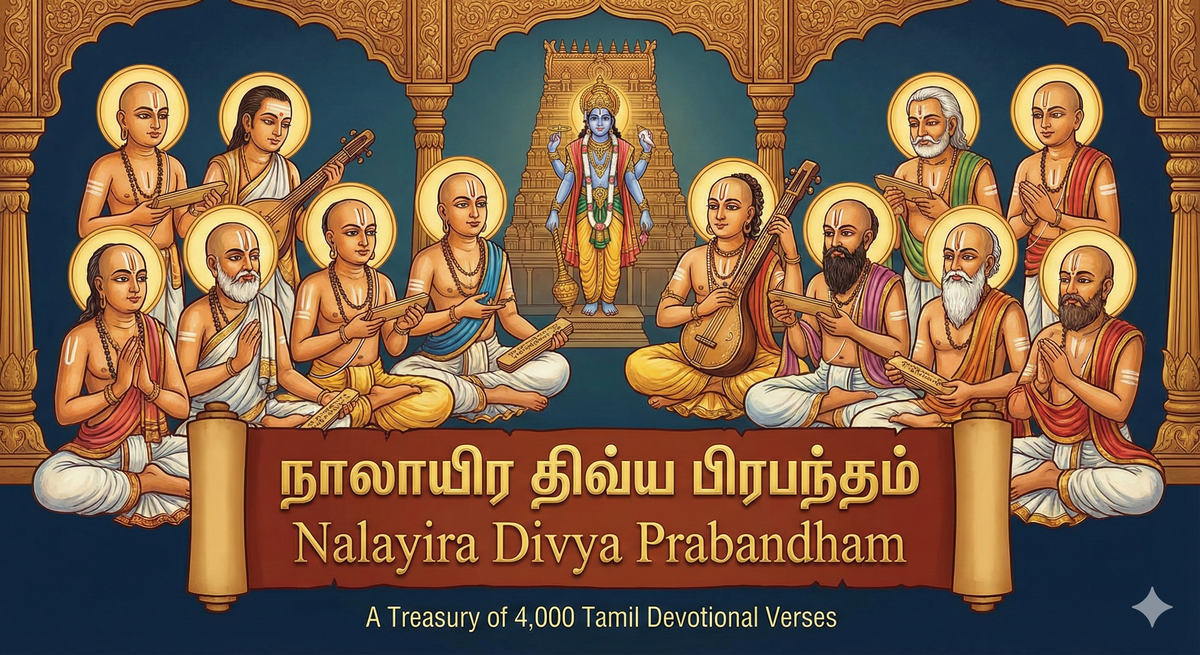
(Tamil text follows the traditional Srirangam recitational flow used in devotional contexts; minor textual variants may exist across manuscripts.) நான்முகன் நாராயணன் பாதம் அறிந்த பின்னே தான்முகம் கொண்டு தவம் செய்தான் ஏனைய தெய்வம் தாழ்வு இல்லை உயர்வு இல்லை என்றான். Tirumazhisai Āzhvār continues his uncompromising clarity. Even the four-faced creator realizes truth only through surrender to Nārāyaṇa. The verse dismantles ego-based hierarchy and restores spiritual order through humility. அறிந்தார் அறிவு அளவில்லாதான் அவனை அறியாதார் அறிவார் அல்லர் அறிந்தேன் அவன் எல்லாம் ஆனான் அறியாமை அகன்றது என்றேன். Knowledge is redefined here. True knowing is not accumulation of facts but recognition of the Supreme. Ignorance dissolves naturally when awareness aligns correctly. உலகம் காணும் அறிவு மயக்கம் உண்மை காணும் அறிவு தெளிவு மயக்கம் தீர உண்மை கண்டேன் நிகரே இல்லை என்றேன். This pāsuram distinguishes worldly cleverness from spiritual clarity. Intelligence without truth creates confusion. The verse urges discernment rather than rejection of intellect. நான்முகன் செய்த தவம் கண்டேன் நாராயணன் அருளால் நான்முகன் தன் நிலை உணர்ந்தான் நாராயணன் முதலாய் நின்றான். Even austerity finds completion only through grace. Tirumazhisai Āzhvār emphasizes that effort alone is insufficient without correct orientation. தெய்வம் எனப் பல பெயர் சொல்வார் தெய்வம் ஒன்று என்றே அறிந்தேன் தெய்வம் பல என எண்ணும் போது துன்பம் பல என்றேன். Multiplicity of gods without unity of source leads to confusion. The verse is firm but not dismissive. It guides the seeker toward coherence rather than fragmentation. முதல் இல்லாதான் முடிவு இல்லாதான் இடை இல்லாதான் எல்லாம் ஆனான் பதில் இல்லாதான் தன்னைத் தானே அறிந்தேன் என்றேன். The Divine is declared beyond beginning, middle, and end. Tirumazhisai Āzhvār’s realization is intellectual and experiential, not emotional excess. உலகம் அவனைச் சூழவில்லை அவனே உலகைச் சூழ்ந்தான் உலகம் அவனுள் அடங்கினால் உலகம் பயம் ஏன் என்றேன். Fear is exposed as illogical when properly examined. If the world rests within the Divine, anxiety loses its footing. This verse blends reason with devotion seamlessly. நான் என்ற உணர்வு அகன்ற பின்னே நீ என்ற உண்மை நிறைந்தது ஏன் என்ற கேள்வி மங்கிய பின்னே தெளிவு நின்றது என்றேன். Ego dissolves not into emotion but into clarity. Tirumazhisai Āzhvār’s peace is firm, still, and resolute. அறிவு அளவில்லாதான் அருள் அளவில்லாதான் குறை ஏதும் இல்லாதான் காப்பான் அவனே என்றேன். Here the Āzhvār declares the completeness of the Supreme. Knowledge, compassion, and protection are unified. The human implication is reassurance without dependency. இதுவே நெறி இதுவே நிலை இதுவே தெளிவு இதுவே பயன் இதுவே அவன் அருள் செய்த பத்து இதுவே எனக்கு என்றும் விளக்கு. The tenth pāsuram seals this set. The lamp of discernment burns steadily, illuminating truth without confusion or excess. These ten pāsurams strengthen the fourth lamp of the Divya Prabandham. Tirumazhisai Āzhvār’s devotion is sharp, fearless, and deeply rational, reminding the seeker that true surrender does not weaken the mind—it clarifies it.