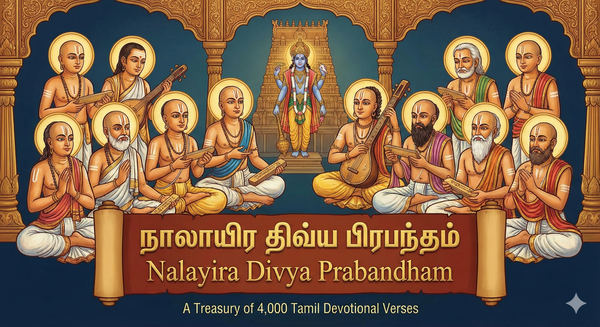
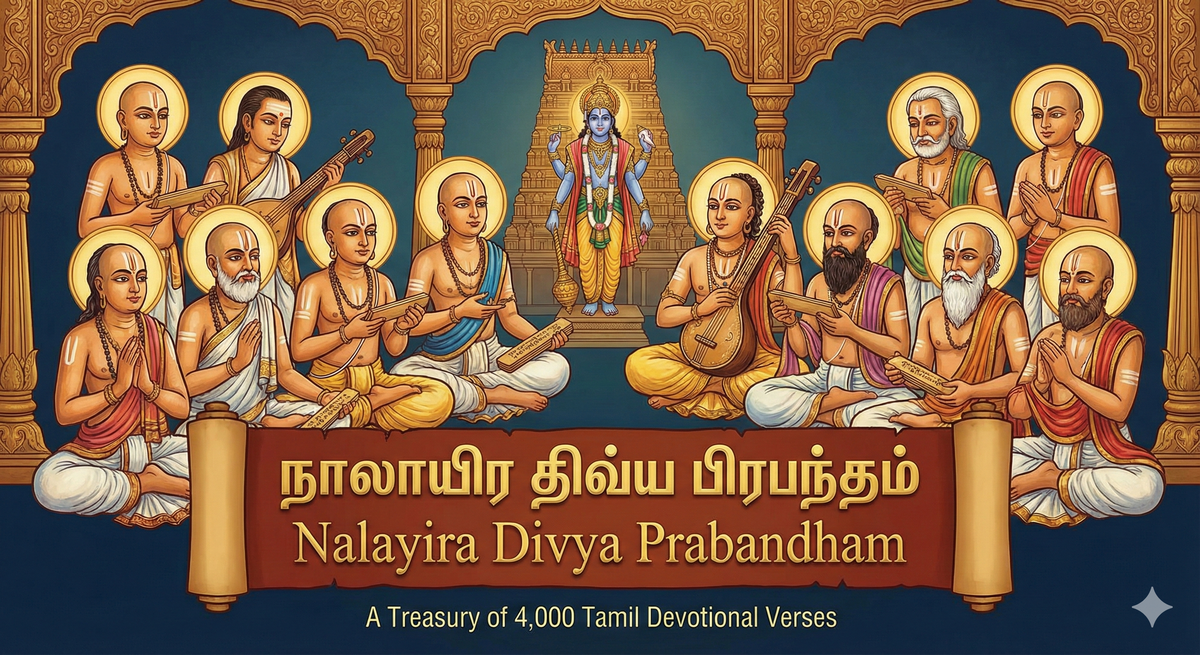
Periyāzhvār Tirumozhi — Periyāzhvār (Pāsurams 21–30)
(Tamil text follows the traditional Srirangam recitational flow used in devotional contexts; minor textual variants may exist across manuscripts.) உன்னை நினைக்கும் போதே என் நெஞ்சம் இளகியது உன் பெயர் சொல்லும் போதே என் கண்கள் நனிந்தது அன்பு என்னும் கடல் பெருகி என்னைச் சூழ்ந்தது. Periyāzhvār’s devotion flows effortlessly. Remembrance itself softens the heart. Love here is spontaneous, not cultivated by effort. உன் மேனி ஒளியை நினைத்தாலே உலகச் சுமை மறைந்தது உன் புன்னகை ஒன்றே போதும் என் உயிர் தாங்க. The Lord’s beauty becomes sustenance. Life draws strength not from possessions or plans, but from divine presence. குழந்தை போல உன்னை எண்ணி நான் காப்பேன் என்றேன் உலகம் முழுதும் நீ காப்பாய் என்பதை அறிந்தும். The sweet paradox continues. Though the Lord protects all worlds, the devotee’s love insists on guarding Him. Innocence becomes the highest wisdom. உன் திருவடி அருகே நின்றால் துன்பம் என்னும் சொல் மறையும் உன் நிழலில் நிற்பதே என் பிறவியின் பயன் ஆனது. Liberation is redefined again as nearness. Suffering dissolves without argument when the heart rests in proximity. உன்னைச் சேவிக்கும் அடியார்களை நான் என் உயிராக எண்ணுவேன் அவர்களுக்குச் செய்யும் சேவை உனக்குச் செய்த சேவையே என்றேன். Periyāzhvār expands devotion outward. Service to devotees becomes direct service to the Lord. Love multiplies naturally. உலகம் உன்னை மறந்தாலும் உன் அடியார் மறப்பாரோ உன் நாமம் ஒன்று போதும் உலகை நிலைநிறுத்த. Confidence in devotion replaces fear. Remembrance itself is seen as sustaining the world. என் சொல் உன்னை வாழ்த்தும் என் நெஞ்சம் உன்னைச் சூழும் என் கண்கள் உன் அழகில் தங்கி நிற்கும். All faculties align in affection. Speech blesses, the heart surrounds, and the eyes rest. Devotion becomes total participation. உன்னை நினைத்து வாழ்வதே என் வாழ்வு என்று உணர்ந்தேன் வேறு பயன் தேட என் நெஞ்சம் ஒப்பவில்லை. Desire simplifies. Once love finds its home, ambition loses its urgency. என் அன்பு உன்னைச் சொல்லும் என் அன்பு உன்னைச் சூழும் என் அன்பு உன்னை வாழ்த்தி நிற்கும். Love itself becomes expression, action, and offering. There is no separation between feeling and worship. இதுவே பல்லாண்டு இதுவே தொடர்ச்சி இதுவே என் அன்பின் இயல்பு உன்னை வாழ்த்தி வாழ்வதே என் உயிரின் நடை. The tenth pāsuram seals this set with continuity of blessing. Devotion is not episodic; it is a way of being. These ten pāsurams further deepen Periyāzhvār’s lamp of love, where devotion matures into constant remembrance, service to devotees, and a life shaped entirely by affection for the Lord. Here, bhakti is not awe—it is belonging.