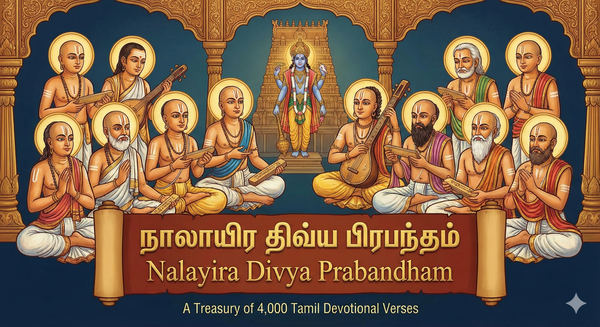
Periyāzhvār Tirumozhi — Periyāzhvār (Pāsurams 51–60
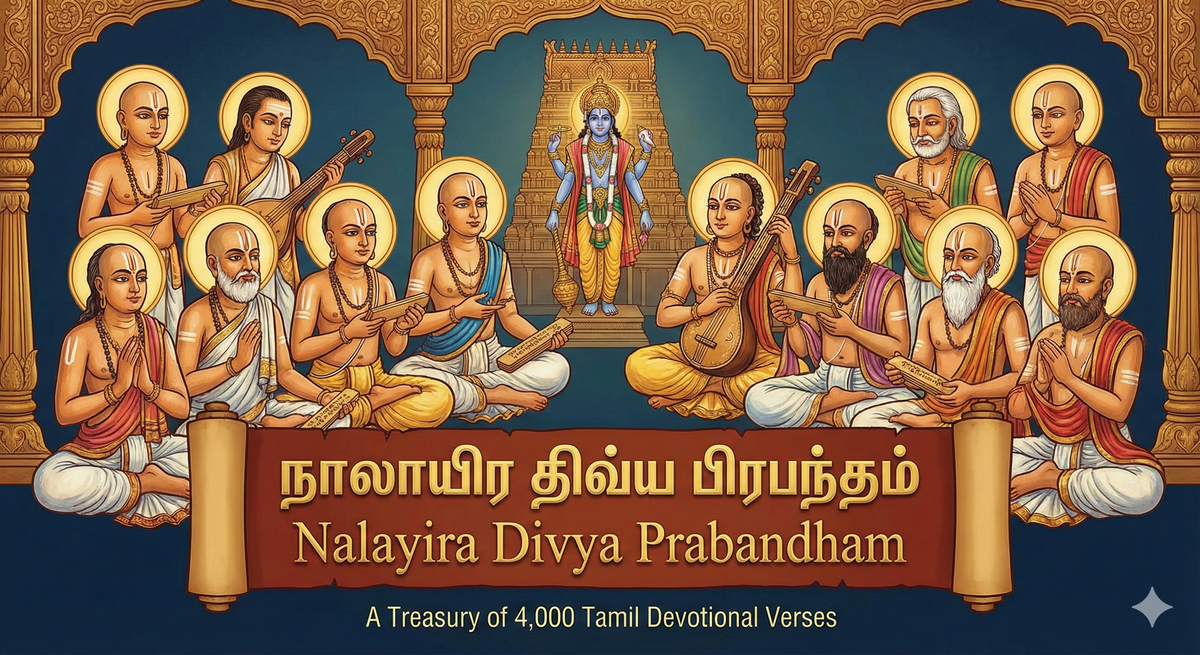
(Tamil text follows the traditional Srirangam recitational flow used in devotional contexts; minor textual variants may exist across manuscripts.) உன்னை நினைத்த நினைவே என் நெஞ்சத்தை ஆளியது உன் நாமம் கேட்ட கணமே என் சோர்வு விலகியது அன்பு தானே எனக்கு உயிரானது. Periyāzhvār opens this set by affirming love as sustenance. Remembrance itself animates life. Devotion is not effort; it is vitality. உன் அழகு நினைத்தபின்னே உலகச் சுமை இலகுவானது உன் புன்னகை ஒன்று போதும் என் நாள்கள் ஒளியடைய. The Lord’s smile becomes light. Problems lose their heaviness when beauty fills perception. குழந்தை என உன்னை எண்ணி நான் காப்பேன் என்றேன் உலகம் முழுதும் நீ காப்பாய் என்பதை அறிந்தும். The tender paradox deepens again. Even with knowledge of the Lord’s omnipotence, love insists on care. Innocence here is spiritual maturity. உன் திருவடி அருகே நிற்பதே என் துன்பம் தீர்த்தது வேறு மருந்து தேட என் நெஞ்சம் நினைக்கவில்லை. Nearness itself heals. The heart no longer seeks alternatives once it finds rest. உன்னைச் சேவிக்கும் அடியார்களை நான் என் சொந்தமாக எண்ணுவேன் அவர்களுக்குச் செய்யும் நன்மை உனக்கே சென்றடையும் என்றேன். Devotion expands into kinship. Service becomes familial, not transactional. உலகம் உன்னை மறந்தாலும் உன் அடியார் மறப்பாரோ உன் நாமம் ஒன்றே காலத்தைத் தாங்கும். Remembrance is seen as the thread holding time together. Faith is quiet confidence. என் சொல் உன்னை வாழ்த்தும் என் மனம் உன்னைச் சுற்றும் என் கண்கள் உன் ஒளியில் தங்கி நிற்கும். Speech, thought, and sight align seamlessly in affection. Worship becomes total presence. உன்னை நினைத்து வாழ்வதே என் வாழ்வு என்று உறுதி பெற்றேன் வேறு பயன் என் நெஞ்சம் ஏற்கவில்லை. Life’s purpose clarifies. Desire simplifies without struggle. என் அன்பு உன்னைச் சூழும் என் அன்பு உன்னைப் பாதுகாக்கும் என் அன்பு உன்னை வாழ்த்தி நிற்கும். Love manifests as closeness, care, and blessing—effortlessly. இதுவே பல்லாண்டு இதுவே தொடர்ச்சி இதுவே என் அன்பின் இயல்பு உன்னை வாழ்த்தி வாழ்வதே என் உயிரின் நடை. The tenth pāsuram seals this set with continuity. Blessing becomes the rhythm of existence. These ten pāsurams continue to enrich Periyāzhvār’s lamp of love, where devotion matures into constancy. Bhakti here is not dramatic or distant; it is everyday affection, steady and fearless, flowing as naturally as breath.