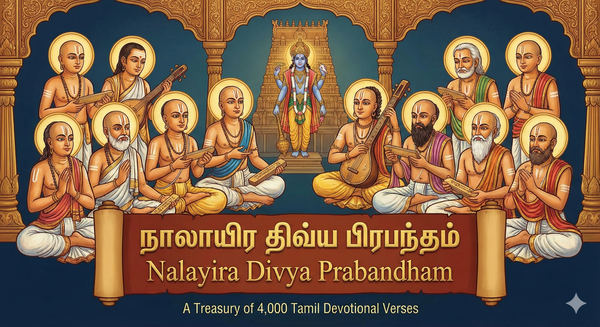
🌺 Peyāzhvār — The Seer of Divine Love
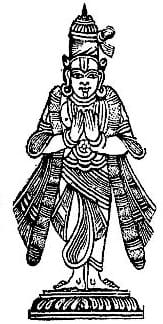
Peyāzhvār, the third of the Mudhal Āzhvārs, is lovingly known as “the Āzhvār who saw.”
If Poigai lit the lamp and Bhutat poured the oil of love, it was Peyāzhvār who looked into that radiance and saw Sriman Nārāyaṇa standing right there, in full divine splendour. His very name “Pey” refers not to madness, but to the divine possession — the state of being so filled with the Lord that the ego has no room left.
Born in the sacred city of Mylapore, Peyāzhvār emerged from a golden lily tank — a symbol of purity rising from stillness. From the moment of his birth, his heart was tuned toward the Divine. His life is a reminder that when devotion becomes intense, God is not a concept but a presence.
The unforgettable moment came at Thirukkovilur, where all three Mudhal Āzhvārs met. As the small hut grew crowded and the mysterious fourth presence pressed upon them, Peyāzhvār’s eyes opened inward. And in that cosmic lamplight, he saw the Lord and Mahālakṣmī together.
His first verse begins:
“Tiruk kaṇḍēn, pon mēni kaṇḍēn…”
“I saw the radiant Lord… I saw His golden form…”
It is not poetry.
It is witness.
Peyāzhvār’s Mūnram Tiruvandādi reads like a love-filled vision — intimate, ecstatic, overflowing with joy. His verses hold the sweetness of a devotee who has seen what the rest of us merely imagine. Every line reassures the seeker:
God is near. God is real. God is reachable.
Listening to his hymns brings courage to the heart, because they remind us that the Divine does not hide from sincere love. Peyāzhvār teaches that when devotion becomes deep, when the ego dissolves, the Lord reveals Himself naturally — without force, without ritual, without complexity.
His message is timeless:
Seek Him with love, and one day, you too will see.