
THE GENTLE HEALING OF BACH FLOWER REMEDIES: DR. EDWARD BACH AND THE MIRACLE OF A SIMPLE DISCOVERY
There are moments in life when the mind becomes tired long before the body does. Moments when we feel overwhelmed, discouraged, confused, or simply “not ourselves.” It is in these moments that many people search for something gentle, something natural, something that speaks to the heart more than to the logic of medicine.
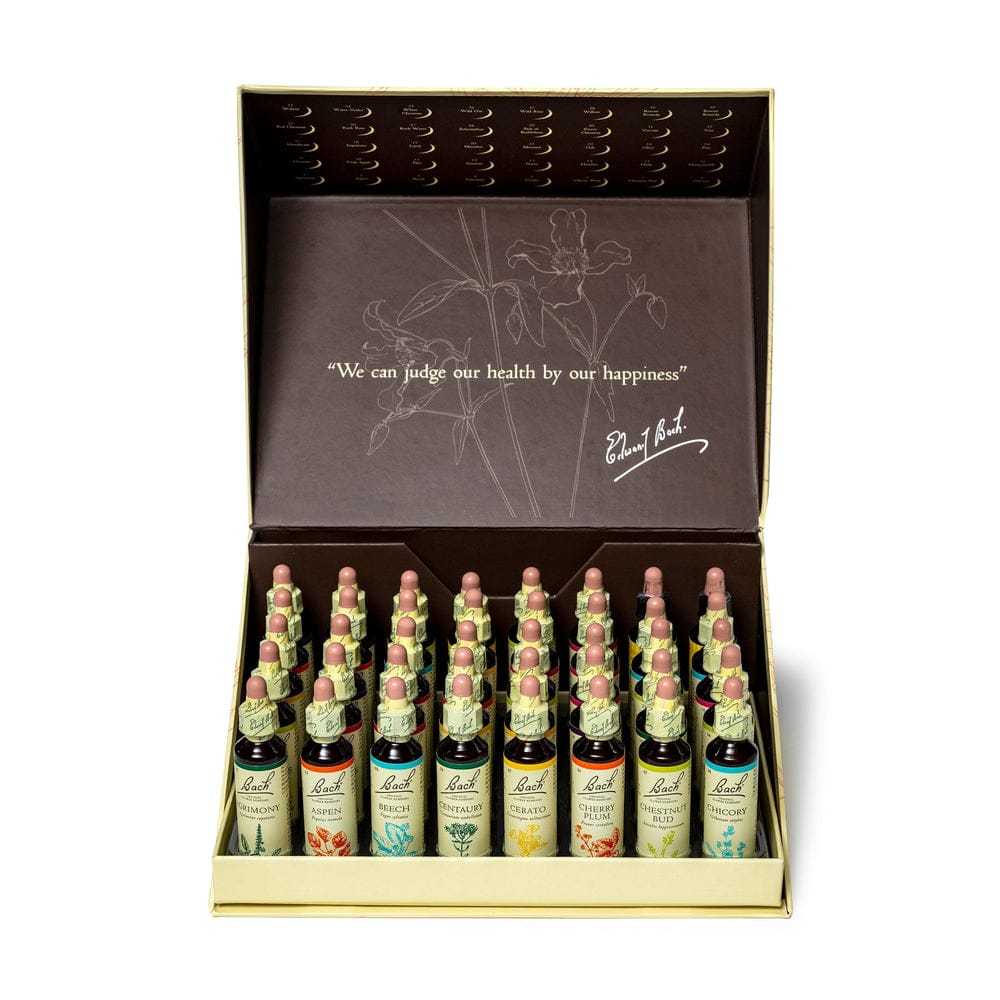
More than ninety years ago, a British physician named Dr. Edward Bach felt the same need. He was a trained doctor, a researcher, and a scientist, yet he believed deeply that healing had to reach beyond the physical body. It had to touch the emotions, the personality, and the unseen places where fear and worry often live. His life’s work led him to create what we today call Bach Flower Remedies — a simple but powerful system of emotional support made from wild flowers.
Even now, decades later, millions around the world use these remedies for comfort, courage, clarity, and inner balance. And the beauty of this system lies in its simplicity: nature, emotion, and intention coming together in the most gentle way.
This is the story of that discovery and the quiet miracle it continues to bring to people’s lives.
The Man Behind the Remedies — Dr. Edward Bach
Dr. Edward Bach (pronounced "Batch") was born in England in 1886. From a young age, he felt deeply connected to nature. He was sensitive to human emotions, often noticing that people’s moods and worries affected their physical health. When he grew older, he studied medicine, becoming a qualified doctor, bacteriologist, and pathologist. He was respected in the medical world, yet he was not fully satisfied.
He saw that patients often improved not just because of medicine, but because they felt hopeful, understood, supported, or relieved. He realized that emotions were not small details in healing — they were major forces.
Dr. Bach believed that when we heal our emotional struggles, we allow our natural vitality to rise again. This idea shaped everything that followed in his life.
A Radical Shift in Understanding Health
During the early 1900s, medicine focused mainly on the physical body. Emotional well-being was rarely discussed. But Dr. Bach felt strongly that emotions like fear, worry, anger, hopelessness, indecision, and loneliness played a huge role in health.
He observed that two patients with the same illness could respond very differently depending on their personality and emotional state. Some were hopeful; some were afraid. Some were stressed; some were calm. Some felt alone; some felt supported. Their emotional condition often influenced how quickly they recovered.
He wanted to find a natural way to help these emotional states. He wanted something safe, gentle, and accessible to everyone — from children to elders, from healthy individuals to those going through deep difficulties. He wanted remedies that carried no harm, no side effects, and no complications.
And so he left his successful medical practice, choosing instead to walk the hills, meadows, forests, and rivers of England, searching for answers in nature.
A Discovery Guided by Intuition and Compassion
Dr. Bach believed that nature held everything we needed. He felt that wild flowers carried specific emotional vibrations — each one balancing a different human feeling. He did not look for chemicals or plant extracts that targeted the body. Instead, he looked for the personality of the flower.
He spent years walking alone in the countryside, touching flowers, tasting dew, observing how each plant expressed itself. Some flowers stood tall and brave. Some grew quietly in corners. Some opened at dawn; some waited for sunlight. He believed that the behavior of each plant reflected the emotional quality it could bring to humans.
Slowly, one by one, he discovered 38 flowers, each linked to a unique emotional pattern. Together, these became the Bach Flower Remedy System.
It was not a miracle in a dramatic, supernatural sense. It was a miracle of clarity, patience, and faith — the kind of miracle that comes when someone listens deeply to nature and tries to understand human suffering in a simple, compassionate way.
What Makes Bach Flower Remedies Unique?
The remedies work on one central idea:
Address the emotion, and the mind will find balance.
When the mind finds balance, the body follows.
Bach Flower Remedies are not medicines in the modern sense. They do not treat physical illness. Instead, they support the emotional states that often make life feel heavy or confusing.
They are:
Gentle — no strong taste, no harsh reaction
Safe for all — children, adults, elderly, even pets
Non-addictive — they do not create dependence
Simple to use — a few drops, a few times a day
Complementary — can be used with other healing methods
Deeply personal — tailored to individual feelings
The goal is not to escape emotions, but to balance them.
The Emotional Categories — Understanding the 38 Remedies
Dr. Bach grouped the 38 remedies into seven emotional categories. This made it easier for people to identify what they needed.
Here is a simple, humanized explanation of each category and a few flowers in them:
- Fear and Anxiety
For people who feel nervous, worried, afraid of the unknown, or full of “what if” thoughts.
Mimulus — fear of specific things (heights, illness, interviews).
Aspen — fear without reason, sudden anxiety.
Rock Rose — panic, terror, extreme fright.
These remedies help bring courage, calm, and steady nerves.
- Uncertainty and Doubt
For those who feel confused, unsure about decisions, or lacking confidence.
Cerato — doubt your own judgment.
Scleranthus — difficulty choosing between options.
Gentian — discouragement after setbacks.
These remedies strengthen trust in oneself and clarity of mind.
- Lack of Interest in Present Life
For those who feel disconnected, tired, stuck in the past, or unable to enjoy the now.
Clematis — dreamers, distracted or absent-minded.
Wild Rose — resigned, lacking motivation.
Olive — emotional or physical exhaustion.
These remedies restore energy, presence, and interest in life.
- Loneliness
For people who feel isolated, impatient, or uncomfortable around others.
Water Violet — prefers solitude, gentle but distant.
Impatiens — impatience, irritability.
Heather — talks a lot because they fear loneliness.
These remedies encourage calm connection with others.
- Oversensitivity to Others
For those who struggle with boundaries, emotions of others, or inner tension.
Agrimony — hides inner pain behind a smile.
Centaury — too eager to please, finds it hard to say no.
Walnut — helps during major life changes.
These remedies promote emotional protection and inner honesty.
- Despair and Hopelessness
For heavy emotions — guilt, sadness, low confidence, grief, or feeling overwhelmed.
Pine — guilt or self-blame.
Sweet Chestnut — deep emotional agony.
Larch — lack of confidence.
These remedies gently bring strength, hope, and self-belief.
- Excessive Care for Others
For those who become over-controlling, critical, or unable to step back.
Chicory — need for closeness, fear of losing love.
Vervain — too enthusiastic or intense.
Rock Water — too strict with oneself.
These remedies help restore balance and flexibility.
The Miracle Is in the Simplicity
Some discoveries change the world loudly — with noise, debate, headlines, and newspaper stories. But the discovery of Bach Flower Remedies changed the world quietly. It touched lives by giving people a safe space to understand their own emotions.
What makes this system feel like a miracle is not magic.
It is the simplicity:
Flowers in sunlight
Water as a carrier
Emotion as a doorway
Nature as the healer
In a world full of complicated treatments and overwhelming information, the Bach system offers something gentle — like a soft hand on the shoulder or a warm light in a dark room.
Why People Still Use Bach Remedies Today
Modern life has not become easier; it has only become faster. Stress has new forms. Fear has new shapes. Uncertainty is everywhere. Yet human emotions remain the same as they were a century ago.
People continue to use Bach remedies because:
They are safe
They bring emotional comfort
They are easy to understand
They give hope without giving false promises
They respect each person’s emotional journey
Many individuals use them when going through breakups, job changes, anxiety, lack of motivation, grief, personal confusion, or emotional burnout. Some use them daily; some use them only during special situations.
The remedies do not force change. They support it.
They do not hide emotions. They balance them.
They do not remove challenges. They strengthen the person facing them.
This gentle nature is what gives them lasting value.
A Hopeful Message for Everyone
Whether someone believes deeply in nature’s healing or simply appreciates emotional support, Bach Flower Remedies offer something universal:
Hope.
Hope that emotions can be understood.
Hope that feelings can shift gently.
Hope that healing does not have to be dramatic or painful.
Hope that even small steps can bring peace.
Hope that nature is always willing to help.
Dr. Bach believed that every person has a purpose in life, and emotional balance helps us move toward that purpose with clarity and courage. His remedies were created not to impress the world, but to lift the human spirit, one emotion at a time.
The Legacy Continues
Today, therapists, doctors, healers, parents, teachers, and everyday individuals continue to use Bach Flower Remedies in more than 70 countries. Workshops are held. Books are written. People share their stories of transformation. And the original spirit of Dr. Bach’s work — simplicity, compassion, and respect for individuality — remains unchanged.
The miracle is that something so simple has touched so many lives for so long.
In a world that often feels complicated, loud, and heavy, Bach Flower Remedies remind us that healing can be:
quiet,
natural,
gentle,
and deeply human.
And sometimes, that is exactly what we need.