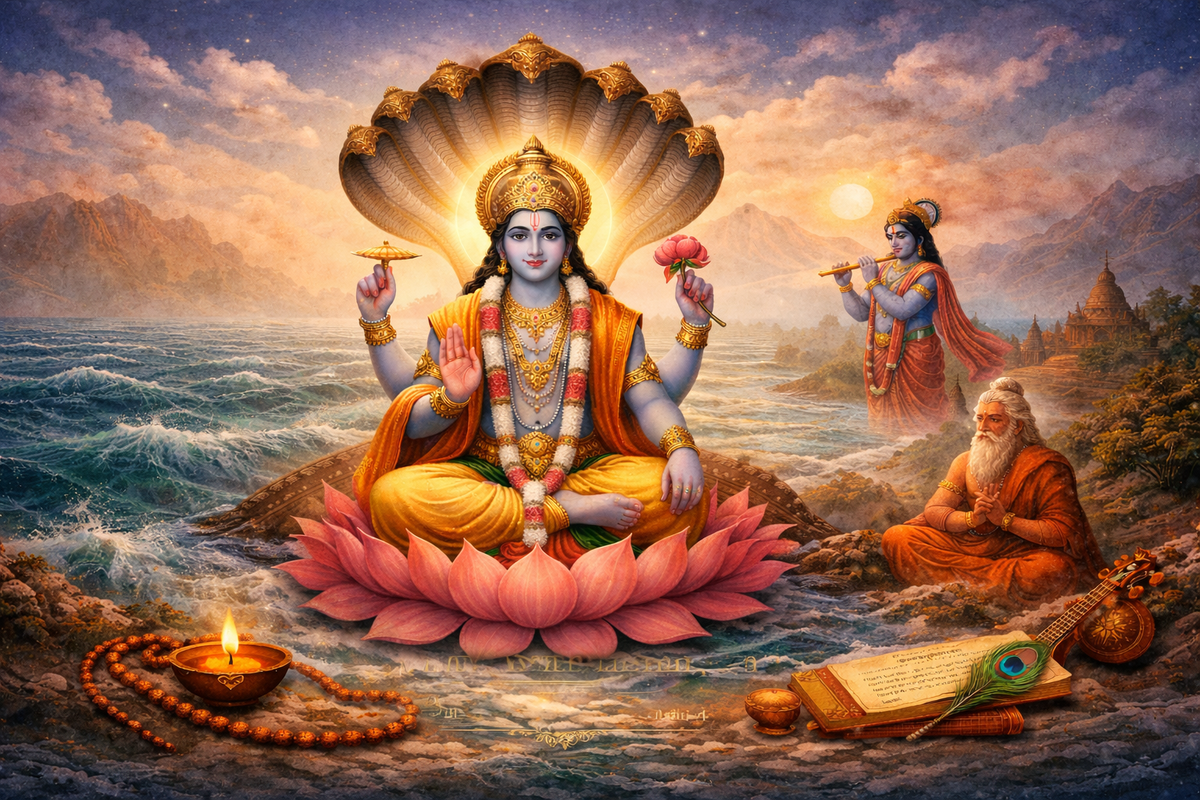
The Pure Consciousness
In this verse, we learn that the Divine is the "Silent Witness" (Sakshi) within us. While our bodies and circumstances change (Avyaya), the light of consciousness remains steady. It encourages us to look inward to find that part of ourselves that is already free and pure.
पूतात्मा परमात्मा च मुक्तानां परमा गतिः । अव्ययः पुरुषः साक्षी क्षेत्रज्ञोऽक्षर एव च ॥
Transliteration pūtātmā paramātmā ca muktānāṃ paramā gatiḥ | avyayaḥ puruṣaḥ sākṣī kṣetrajño'kṣara eva ca ||
The Meaning Pūtātmā: The Pure Soul, untainted by the qualities of the material world. Paramātmā: The Supreme Soul, the source of all individual souls. Muktānāṃ paramā gatiḥ: The ultimate goal or refuge of those who have attained liberation. Avyayaḥ: The Imperishable, who never diminishes or changes. Puruṣaḥ: He who dwells within the "city" of the body, or the Supreme Person. Sākṣī: The Witness, who observes everything without being attached. Kṣetrajñaḥ: The Knower of the Field (the body and the mind). Akṣaraḥ: The Indestructible, who remains constant even when the world dissolves.
The Essence In this verse, we learn that the Divine is the "Silent Witness" (Sakshi) within us. While our bodies and circumstances change (Avyaya), the light of consciousness remains steady. It encourages us to look inward to find that part of ourselves that is already free and pure.