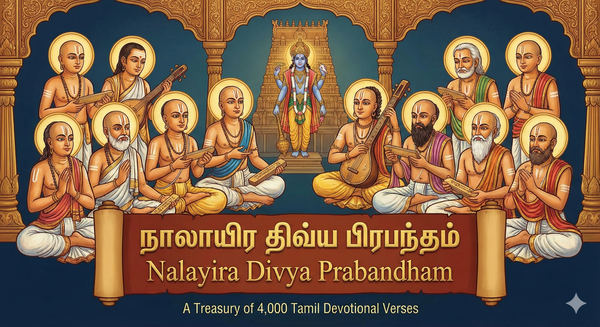
Why I Took Up This Project: 4000 Divya Prabandham
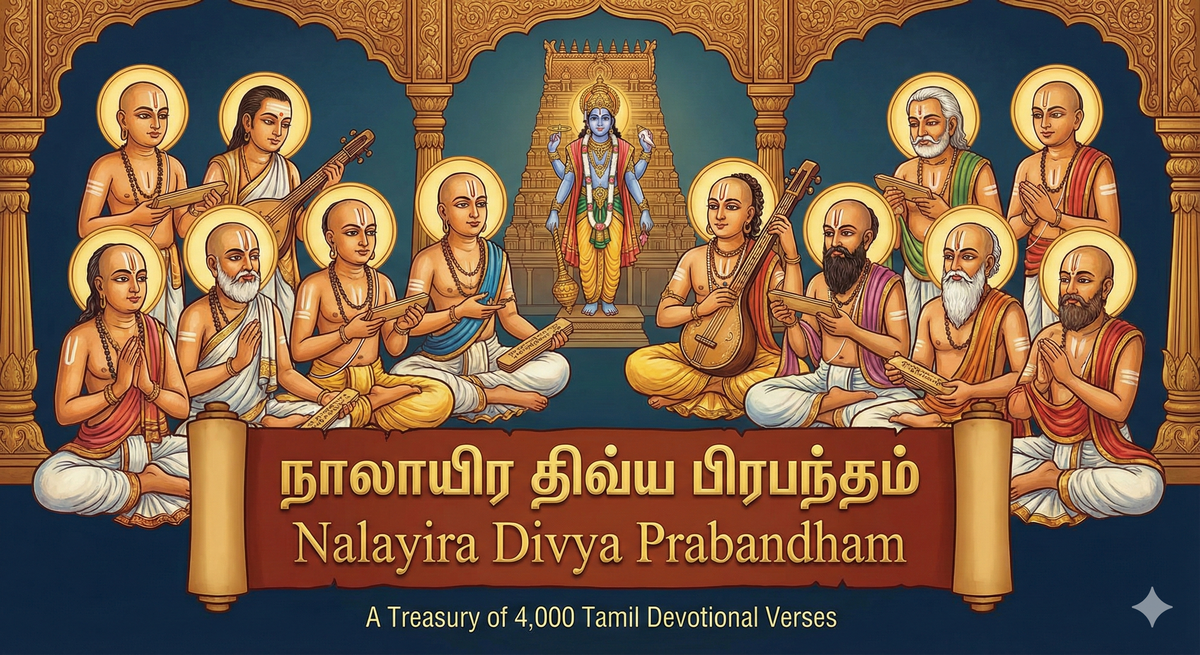
This project began not as an ambition, but as an inner calling—quiet, persistent, and humbling. The Nālaayira Divya Prabandham does not invite ownership; it invites surrender. In taking up this work, I do not see myself as an author or authority, but as a daily student, recorder, and servant—standing with folded hands before Perumal and the long, unbroken Vaishnava tradition that has preserved these sacred verses for centuries.
The Divya Prabandham is not merely literature. It is lived devotion. It is theology expressed through emotion, philosophy carried by poetry, and surrender spoken in the most intimate language of the heart. The Azhwars did not compose to impress; they poured themselves out completely. Their bhakti was fearless, vulnerable, intense, and uncompromising. To engage with their words, even indirectly, requires humility and discipline.
This project is therefore undertaken with one clear boundary: reverence. The original Tamil pasurams remain sacred, authoritative, and untouched. What is presented here are not replacements or reinterpretations, but explanatory reflections—meant only to help understanding, contemplation, and continuity. This distinction has been formally declared and published across languages, so that there is no confusion of intent, scope, or position. Scripture remains scripture; commentary remains commentary.
The decision to log this work daily is itself an act of discipline. By following the traditional order and moving slowly, pasuram by pasuram, this project resists haste and spectacle. It chooses steadiness over scale. It chooses continuity over completion. Once every few entries, there will be pauses for reflection—views, commentaries, or thematic observations—but the primary commitment remains faithful progression.
This work is also an offering to the Tamil language itself. Tamil here is not a medium; it is a sacred vessel. The Divya Prabandham stands as one of the highest affirmations of Tamil’s spiritual, poetic, and philosophical power. To approach it daily is to acknowledge that this language has carried divinity with precision, beauty, and depth unmatched.
Above all, this project is an act of gratitude—to Perumal, to the Azhwars, and to the Vaishnava sampradayam that safeguarded this treasure through time. If these daily logs help even one reader pause, reflect, or turn inward with devotion, then the effort stands justified.
This is not a destination. It is a daily walk—taken slowly, respectfully, and in surrender.