ZANABIA ENSEMBLE
There are cities that function.
There are cities that flourish.
And then there is Zanabia—which, quite frankly, performs.
Not performs in the theatrical sense (though it does that too, loudly, and often without rehearsal), but performs like an orchestra that somehow never read the same sheet music and still produces harmony. Or at least something very close to it. Close enough that nobody complains, and if they do, they are gently handed a pastry and distracted.
The Ensemble, as it is fondly called, is not an organization. There are no memberships, no committees, and absolutely no minutes recorded—because the last time someone tried, the minutes turned into a poem, then a recipe, and eventually a dance.
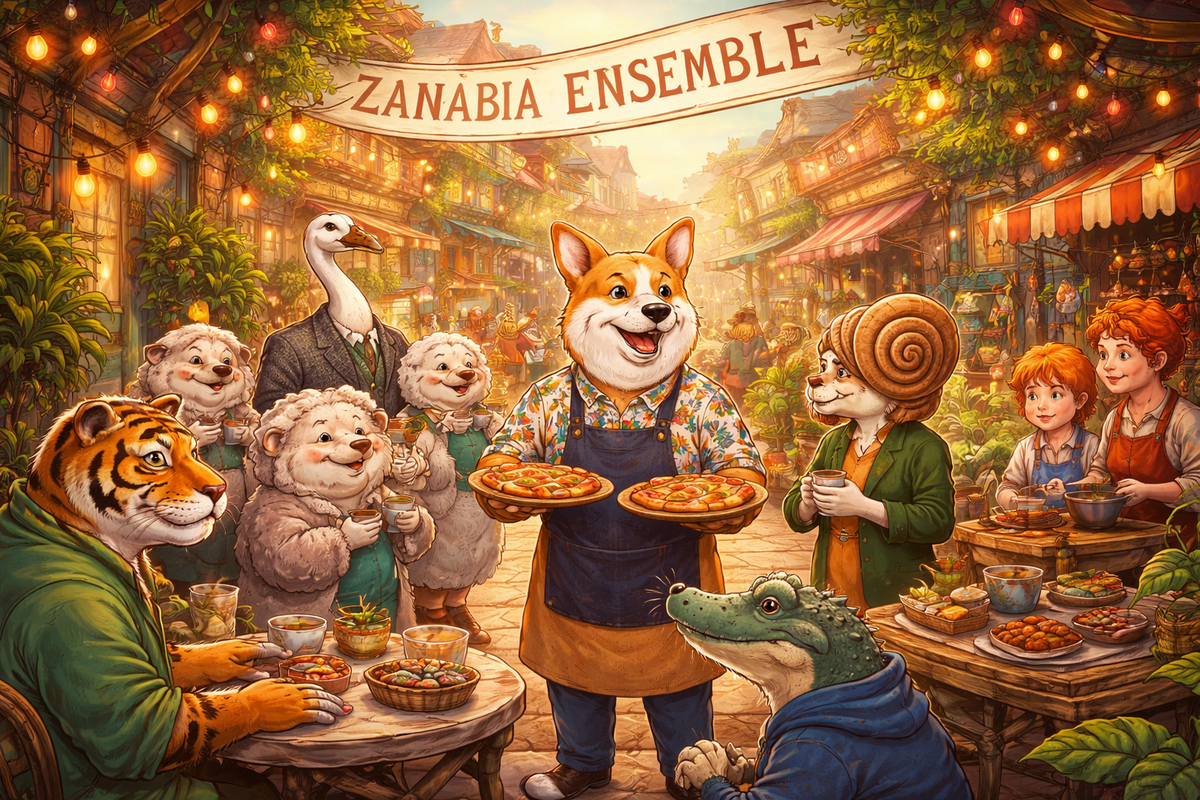
At the informal center of this beautifully uncoordinated coordination stands Blenchy, the corgi-headed custodian of cheer, who believes deeply that problems dissolve faster when served with warm pizza and slightly overenthusiastic hospitality. Blenchy does not manage the Ensemble. Blenchy hosts it. There is a difference. Management seeks control. Hosting invites chaos and calls it community.
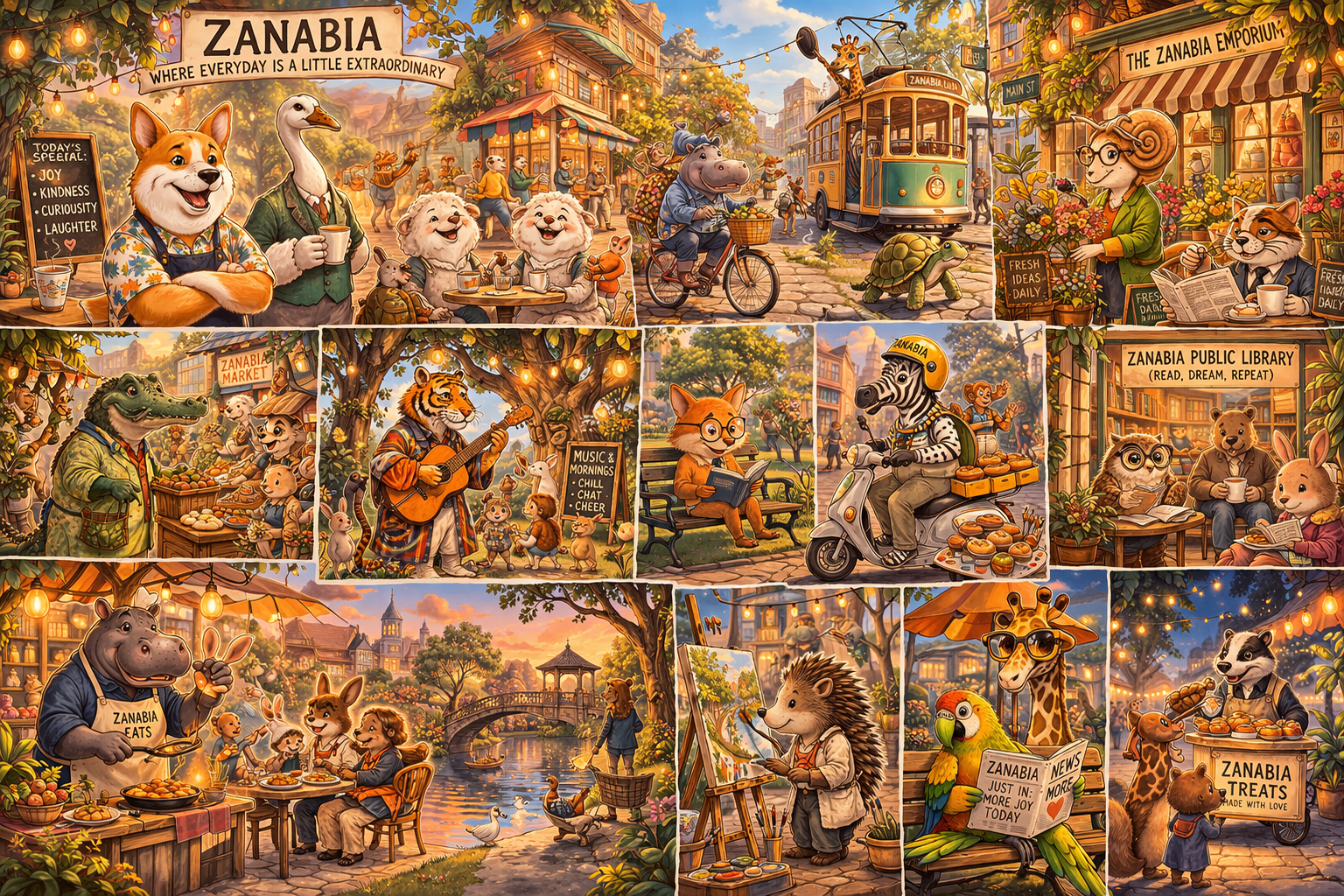
Then there are the Woolybays, who arrive everywhere as a collective, think together, laugh together, and occasionally disagree together in such synchronized fashion that it feels choreographed. Their conversations begin with logic and end in laughter, often bypassing the middle entirely.
Mr. Swanse, ever dignified, carries himself like a man who understands structure, discipline, and the importance of eggs in all philosophical discussions. He speaks less, observes more, and when he does speak, people pause—not because they must, but because it feels like the right thing to do.
Ms. Snailhead, entrepreneur of the unexpected, moves at her own pace—which, as it turns out, is precisely the speed at which things in Zanabia tend to succeed. Her ventures are never rushed, rarely explained, and almost always effective. Nobody knows how. Everyone benefits anyway.
And then there are the others—the tiger who rarely speaks but always notices, the alligator who shops with intent but leaves with curiosity, the ginger-headed shopkeepers who measure spices and stories with equal generosity.
What makes the Zanabia Ensemble remarkable is not what they do, but how they exist with one another. There is no urgency to outperform, no silent competition disguised as cooperation. Success here is not a race; it is a ripple. When one rises, the others adjust—not out of obligation, but out of instinct.
Disagreements happen, of course. But in Zanabia, disagreements are treated like passing weather. A little shade, a brief drizzle, and then someone inevitably suggests tea, which solves most things except perhaps the deeper philosophical questions—which are, conveniently, postponed.
The Ensemble does not aim for perfection. It aims for presence. For participation. For that quiet understanding that life, much like Zanabia itself, is less about getting everything right and more about showing up fully—sometimes mismatched, often unprepared, but always willing.

And that is why Zanabia works.
Not because it is structured.
Not because it is efficient.
But because, in its own delightfully imperfect way,
it is together.